

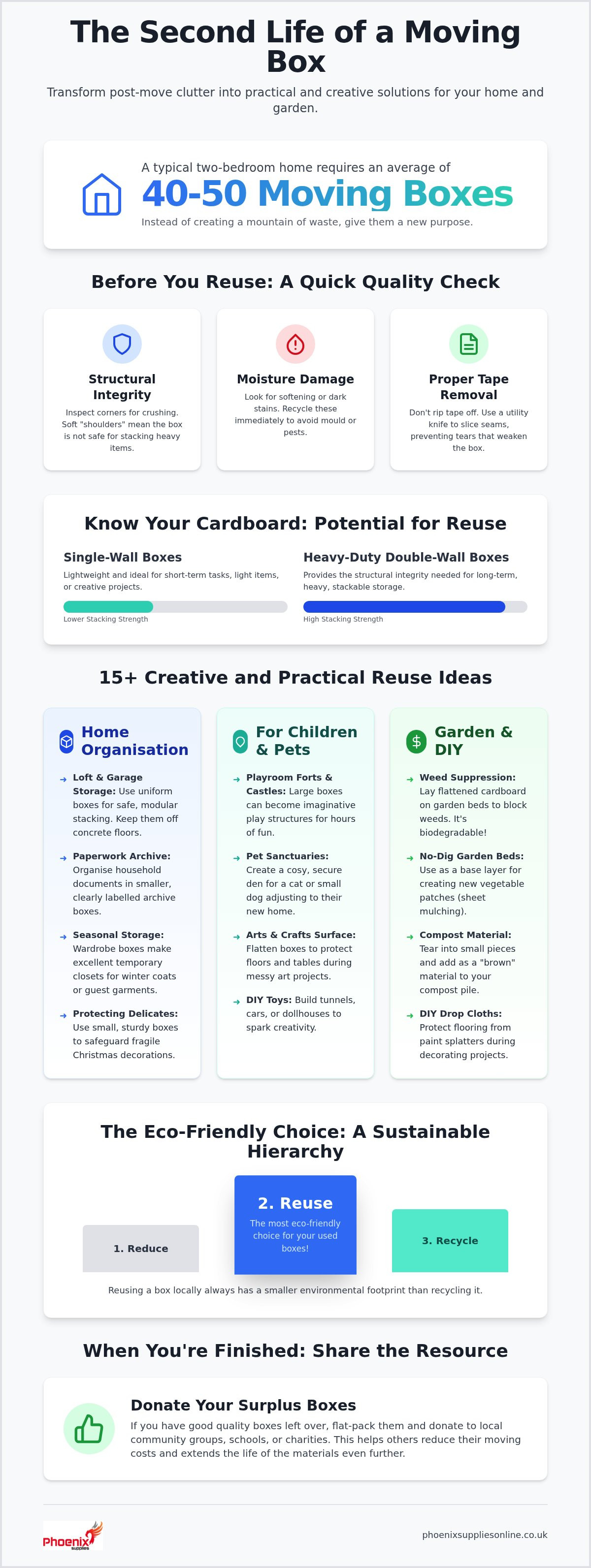
Did you know that a typical two-bedroom home requires between 40 and 50 moving boxes to get the job done? It's a staggering amount of cardboard that often ends up as a mountain of clutter in the garage or hallway once the final van is unloaded. We understand the frustration of seeing valuable floor space disappear and the pang of guilt that comes with throwing away perfectly good materials. If you're wondering how to reuse moving boxes instead of letting them go to waste, you aren't alone.
We believe that a quality box is a structural resource that deserves a second life. You can transform your post-move leftovers into clever storage solutions, practical garden aids, and even imaginative toys for children or pets. This guide will show you how to turn that stack of heavy-duty cardboard into a tidy, organised home whilst saving you the cost of buying new plastic containers for the loft. We'll explore over 15 creative and practical ideas to help you reduce your environmental footprint and make the most of every square inch of your new property.
Key Takeaways
- Identify the structural potential of your cardboard, from single-wall containers for light tasks to heavy-duty double-wall boxes for long-term stackable storage.
- Discover how to reuse moving boxes to create professional archive systems for household paperwork or seasonal storage solutions for your winter wardrobe.
- Provide immediate comfort and entertainment for your family by transforming spare boxes into playroom castles or secure sanctuaries for pets adjusting to a new home.
- Utilise leftover cardboard as a sustainable, biodegradable resource in the garden for effective weed suppression and successful no-dig vegetable patches.
- Learn the best ways to flat-pack and donate your surplus materials to local community groups to help others reduce their moving costs.
The Hidden Value of Your Empty Moving Boxes
Once the removal van departs, you're often left with a sea of brown cardboard that feels more like a burden than a benefit. However, the secret to learning how to reuse moving boxes effectively lies in recognising the quality of the material you have. High-quality cardboard moving boxes are designed to withstand significant pressure, making them far more than a one-trip item. Whether you have small archive boxes or large wardrobe containers, these items are versatile household resources that can save you money on future storage needs.
The difference in potential reuse often comes down to construction. Single-wall boxes are lightweight and best suited for short-term tasks or light items. In contrast, heavy-duty double-wall boxes provide the structural integrity required for long-term stacking in lofts or garages. By extending the lifecycle of these paper-based products, you directly reduce the demand for new timber and energy-intensive manufacturing processes. A standard Cardboard box is a marvel of engineering that can be repurposed multiple times before it finally hits the recycling bin.
Assessing Box Strength and Condition
Before you decide which boxes to keep, perform a quick assessment. Understanding how to reuse moving boxes helps you prioritise which containers are worth the space in your new loft. Check for the following details:
- Structural integrity: Inspect the corners for crushing. If the "shoulders" of the box are soft, it won't be safe for stacking heavy items.
- Moisture damage: Look for softening at the base or dark stains. These boxes should be recycled immediately as they may harbour mould or pests.
- Tape removal: Don't rip off packing tape. Use a utility knife to slice through the tape along the seams to avoid tearing the outer liner and weakening the box.
A Sustainable Approach to Moving
Embracing a sustainable mindset means following the hierarchy of "Reduce, Reuse, Recycle" in that specific order. Whilst recycling rates for cardboard in the U.S. were between 69% and 74% in 2024, reusing a box locally is always the more eco-friendly choice. Circular packaging in residential moves is the practice of maintaining the highest utility and value of moving materials for as long as possible through repeated use and repurposing. By choosing durable supplies from the start, you ensure your boxes survive the journey and remain ready for their next role in your new home.
Practical Home Organisation and Long-Term Storage
The most immediate way to clear the post-move clutter is to put those containers to work in your new loft or garage. Many people view a cardboard box as a temporary vessel, but high-quality double-wall cardboard is a robust building block for a professional-grade storage system. If you invested in heavy-duty supplies, you've already purchased the most reliable storage units available. Understanding how to reuse moving boxes for organisation allows you to skip the expensive trip to the plastic tub aisle and start creating a tidy home immediately.
Loft and Garage Storage Solutions
Maximising vertical space is the key to an efficient loft. When you use uniform medium moving boxes, you create a modular system that stacks safely and securely without the lean associated with mismatched containers. This uniformity is particularly helpful in small lofts where every centimetre counts. For those looking for inspiration, Repurposing Your Moving Boxes offers excellent insights into how these simple items can replace costly furniture.
To keep your items in peak condition, consider these practical tips:
- Label effectively: Use a thick marker to label at least two sides of each box. This ensures you can identify the contents whilst they are stacked high.
- Prevent damp: Cardboard is a natural material that can absorb moisture from concrete floors. Use wooden pallets or simple shelving to keep your boxes off the ground in garages.
- Protect delicates: Small moving boxes are perfect for fragile Christmas decorations. Their thick walls provide better insulation against temperature changes than thin plastic bins.
Repurposing Specialist Moving Boxes
Specialist containers offer unique benefits for home management. For instance, wardrobe boxes are not just for the journey; they make excellent temporary closets for guest rooms or seasonal coat storage in the garage. The integrated hanging rail keeps garments crease-free and off the floor, providing a breathable environment for woollens and heavy jackets.
Similarly, archive boxes are designed specifically for the longevity of paper. Their lift-off lids and reinforced handles make them the ideal choice for managing household tax records, old photographs, or school memories. Because they are designed for professional-grade document storage, they offer far better protection against dust and light than standard containers. If you want to ensure your boxes are sturdy enough for these long-term roles, you can browse our range of heavy-duty boxes to see the difference quality construction makes.
To complement your document storage system, having a reliable source for paper and stationery is key. Mega Office Supplies offers a comprehensive range of office essentials, ensuring you have everything needed to keep your records tidy and accessible.
Creative Repurposing for Children and Pets
Moving house is often a whirlwind of activity for adults, but for children and pets, it's a time of immense change and curiosity. Instead of rushing to recycle your supplies, you can use them to create a sense of fun and security in your new home. Learning how to reuse moving boxes for imaginative play or pet comfort is a fantastic way to bond as a family whilst the unpacking continues. Because heavy-duty boxes are designed for durability, they provide a much sturdier foundation for play structures than standard retail packaging.
The Classic Cardboard Fort
A large moving box is rarely just a box to a child; it's a castle, a spaceship, or a secret base. By using duct tape and a few large or extra-large boxes, you can construct multi-room forts that span the playroom. For the best results, cut doorways between boxes and secure them with tape on both the inside and outside to ensure the structure remains stable during active play. If you want to decorate, use felt-tip pens or crayons rather than heavy paints, as excess moisture can soften the cardboard and cause it to sag. When playtime is over, these structures can be carefully untaped and flat-packed behind a wardrobe, ready for another day.
Pet-Friendly Projects
Pets often feel vulnerable in a new environment, and a familiar-smelling cardboard box can be the perfect sanctuary. Cats, in particular, are drawn to the enclosed nature of boxes as they provide a 360-degree sense of security. You can create a multi-level 'cat condo' by stacking medium boxes and cutting circular entry holes. For a more functional project, try making a homemade scratching post. Cut long strips of corrugated cardboard from leftover scraps and glue them together with the "waffle" side facing up. This creates a dense, satisfying texture that helps cats maintain their claws whilst keeping them away from your new furniture.
Dogs can also join the fun with simple hide-and-seek games. Place small treats inside a few small boxes and scatter them around the room. It's a great way to encourage their natural foraging behaviour and keep them occupied whilst you're busy organising the kitchen.
Safety is paramount when building these structures. Always check every box for metal staples or sharp tape edges before letting a child or pet inside. Ensure you cut plenty of ventilation holes, especially in larger forts or pet hideaways, to maintain a fresh airflow. By taking these simple precautions, you can turn your post-move clutter into hours of safe, cost-free entertainment.
Functional Garden and DIY Applications
Moving into a new home often signals the start of garden projects and minor renovations. Instead of spending extra at the local DIY centre, understanding how to reuse moving boxes for functional tasks can save you a significant amount of money. Cardboard is remarkably effective as a temporary protective layer and a long-term soil improver, making it a favourite tool for savvy homeowners.
Cardboard in the Garden
The "No-Dig" gardening method has gained massive popularity because it builds soil health without the back-breaking work of tilling. You can use your empty moving boxes to start a new vegetable patch or suppress weeds in overgrown borders. The process is straightforward and highly effective for creating nutrient-rich growing spaces.
To prepare your boxes for the garden, follow these steps:
- Strip away all plastic packing tape and adhesive labels to ensure only biodegradable material enters the soil.
- Flatten the boxes completely so there are no gaps for weeds to poke through.
- Lay them over the grass or weeds, overlapping the edges by at least 15cm to prevent regrowth.
- Thoroughly soak the cardboard with a garden hose to help it settle.
- Cover with a thick layer of compost, woodchips, or well-rotted manure.
The cardboard acts as a biodegradable barrier that starves weeds of light whilst attracting earthworms that aerate the soil. Any scraps that aren't used for mulching can be shredded and added to your compost heap. It's a vital "brown" carbon source that helps balance green kitchen waste and keeps your compost healthy.
DIY and Floor Protection
Your new house might need a fresh coat of paint or some electrical work. Large moving boxes are the perfect tool for protecting your investment. By flattening out large or extra-large boxes, you can create a sturdy walkway for tradespeople, preventing mud and grit from ruining your new carpets.
Placing a layer of thick cardboard beneath your tools or ladders provides a reliable buffer that prevents scratches on laminate flooring during DIY projects. Beyond floor protection, cardboard is excellent for creating templates. If you're unsure if a new sofa or rug will fit, cut a cardboard footprint to the exact dimensions and move it around the room. You can also use smaller offcuts to create custom drawer dividers for your kitchen cabinets, keeping utensils perfectly organised from day one. If you've run out of sturdy material for these projects, you can order heavy-duty cardboard boxes to ensure you have the protection you need for your home improvements.
Sharing the Resource: Donation and Recycling
Once you've organised your loft and built a castle for the children, you might still find yourself with a surplus of cardboard. Passing these items to someone else is the ultimate way to participate in a circular moving process. Learning how to reuse moving boxes often involves helping your neighbours reduce their own moving costs. High-quality double-wall boxes are particularly prized by others because they can safely survive a second or third journey without losing their structural integrity.
Passing Boxes to the Next Mover
Digital platforms make it incredibly easy to find someone in need. Sites like Freecycle, Nextdoor, and local Facebook community groups are bustling with people looking for sturdy supplies. To be as helpful as possible, try offering "moving kits" rather than a random assortment of individual boxes. Bundling a few medium boxes with leftover bubble wrap or mattress and furniture covers provides a complete solution for someone just starting their packing process. You might also check with local schools or charities; they often need durable boxes for seasonal storage or large-scale art projects.
Before you hand them over, take a moment to prepare the boxes properly. Use a utility knife to cleanly slice through any remaining tape so the next person can easily reassemble them. If you've written on the boxes, a quick strike-through with a thick marker helps the next mover stay organised with their own room labels. This small bit of effort ensures the boxes remain a valuable resource rather than just more clutter for the new owner to manage.
The Final Step: Responsible Recycling
Eventually, every box reaches a point where it can no longer be reused. When the corners are crushed or the cardboard has become soft, responsible recycling is the best path forward. Most local councils in the UK have specific rules for kerbside cardboard collection. To ensure your boxes are accepted, you must flatten them completely. This saves space in the recycling lorry and makes the process more efficient for the collection teams. If you have a large volume, use twine or string to bundle the flattened sheets together.
It's vital to keep your cardboard dry until the morning of collection. Wet cardboard can clog recycling machinery and significantly reduces the quality of the recycled pulp. If the forecast predicts rain, wait until the last possible moment to put your bundles out or take them to a local household waste recycling centre. By following these simple steps, you ensure that the paper fibres can be processed into new products, completing the lifecycle of the material you've used so well. Knowing how to reuse moving boxes to their absolute limit is a great way to respect the environment whilst keeping your new home tidy.
Make Your Move a Sustainable Success
Transforming your post-move clutter into useful household resources is a rewarding way to settle into your new home. From creating a modular loft storage system to establishing a new vegetable patch through sheet mulching, the potential for repurposing is vast. Learning how to reuse moving boxes doesn't just save you money on expensive storage containers; it also significantly reduces your environmental footprint. Every box you repurpose is one less item in the recycling bin and one more clever solution for your property.
The success of these projects depends on the quality of the materials you use. We're a family-run business with a focus on personal service and professional reliability. Our heavy-duty double-wall boxes are designed specifically for durability, making them ideal for multiple moves and long-term reuse. You can view our range of durable, reusable moving boxes at Phoenix Supplies UK with national delivery included on all orders. We're here to help you create a tidy, organised home that you can be proud of. Happy unpacking!
Frequently Asked Questions
Can I reuse moving boxes for shipping items through the post?
Yes, you can reuse moving boxes for shipping, provided they are still structurally sound and free from significant damage. You must remove or completely cover any old barcodes and addresses to prevent delivery errors. Heavy-duty double-wall boxes are excellent for this as they offer superior protection for fragile items during transit. Just ensure the box is taped securely along all seams before you drop it at the post office.
How do I get the smell out of old cardboard boxes before reusing them?
The most effective way to remove lingering odours is to leave the boxes open in a dry, sunny spot for a few hours. Cardboard is porous, so fresh air and sunlight naturally help dissipate smells. For tougher odours, sprinkle a small amount of baking soda inside the box and leave it for 24 hours before shaking it out. This is a simple, cost-free method to freshen up your supplies for home organisation.
Is it safe to use moving boxes for food storage in the pantry?
It's perfectly safe to use moving boxes for storing sealed food items like tins, jars, or packets in your pantry. However, you should avoid placing loose or unpackaged food directly against the cardboard, as the material isn't food-grade and can absorb moisture or oils. Using small moving boxes to categorise your dry goods is a brilliant way to keep your new kitchen cupboards tidy and organised from the day you move in.
How many times can a high-quality moving box be reused?
A high-quality, double-wall moving box can typically be reused between three and five times for actual removals before it loses its structural integrity. If you are learning how to reuse moving boxes for static storage in a loft or garage, they can last for over a decade. The lifespan depends heavily on whether the boxes are kept dry and if the tape is removed carefully each time to prevent tearing the outer liner.
Can I use cardboard boxes in my garden if they have ink on them?
Yes, most modern moving boxes use soy-based or water-based inks that are safe for garden use and will break down naturally. You should avoid using boxes with heavy glossy coatings or those with large amounts of coloured plastic tape still attached. When using them for sheet mulching or as a weed suppressant, the plain brown cardboard is a valuable resource that earthworms love, helping to improve your soil quality over time.
What should I do with boxes that are too damaged to be reused?
If a box is too soft or torn to be used again, the best option is to recycle it through your local council's kerbside collection. You should flatten it completely and remove any plastic tape first. Alternatively, if you have a home compost bin, you can shred the damaged cardboard and use it as a "brown" material to balance out green kitchen waste. This ensures that even the most worn-out supplies don't go to waste.
How do I store empty boxes if I want to keep them for a future move?
To store boxes for a future move, you must flatten them completely and keep them in a cool, dry place. Moisture is the biggest enemy of cardboard, as it causes the fibres to soften and lose their strength. Storing them under a bed or behind a wardrobe in a climate-controlled room is much better than a damp shed. This simple step ensures your heavy-duty supplies remain in peak condition for your next property transition.
Are wardrobe boxes too big to be reused for anything else?
Wardrobe boxes are incredibly versatile due to their height and strength. Beyond clothes storage, they are perfect for keeping tall, awkward items like rolls of wallpaper, garden tools, or sports equipment organised in a garage. If you are exploring how to reuse moving boxes for family fun, their size makes them the ideal foundation for a child's playhouse or a large pet sanctuary. Their heavy-duty construction means they can handle much more than just garments.


