

If you have been placing the flat side of the wrap against your favourite vase, you have actually been doing it wrong. It is a common mistake that leaves your most fragile items vulnerable to shocks and vibrations during transit. We understand that moving house is a daunting task, especially when you are worried about breaking sentimental or expensive belongings. You want to feel confident that your boxes are packed securely, but the sheer variety of materials and sizes can feel overwhelming. Learning exactly how to use bubble wrap for moving is the best way to gain that peace of mind and protect your investment.
We are here to help you master the professional techniques used by removals experts to ensure a damage-free move. In this 2026 guide, we will explain why the bubbles must face inwards and how to calculate the right amount of wrap so you do not waste money on unnecessary rolls. We will also look at how to stay compliant with the new EU Packaging and Packaging Waste Regulation standards that took effect this August. From choosing the correct bubble size for delicate glassware to securing large electronics, this steady guide will help you pack with the efficiency and care of a local specialist.
Key Takeaways
- Learn why the orientation of the air pockets is the most critical factor for protecting your belongings from unexpected shocks and vibrations.
- Discover how specific wrapping techniques and bundling can stop smaller items from shifting or colliding within your moving boxes.
- Master how to use bubble wrap for moving by choosing between 10mm and 20mm bubble sizes to suit different weights and surfaces.
- Avoid common mistakes like applying adhesive tape directly to furniture finishes, which often causes permanent damage to the wood or paint.
- Understand why professional-grade materials provide better value and protection than standard supermarket alternatives for a full house move.
The Fundamentals: How to Use Bubble Wrap Correctly
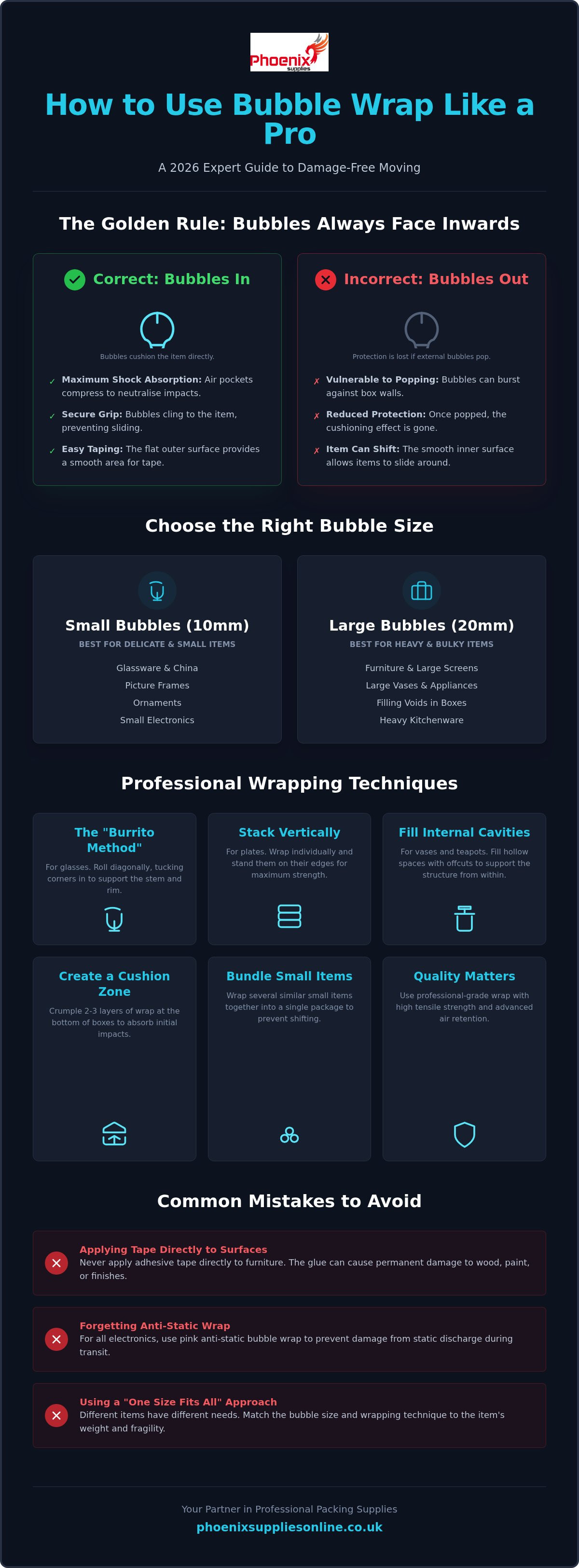
When you are preparing for a house move, it is easy to focus on the quantity of packing material rather than the technique. However, the most important lesson in how to use bubble wrap for moving is the orientation of the sheet itself. The golden rule is simple: the bubbles must always face the item you are protecting. Think of these tiny pockets as individual shock absorbers. When the bubbles are tucked against the surface of your vase or plate, they can compress and expand to neutralise impacts from bumps in the road or shifts in the van. The history of Bubble wrap shows it was originally designed for a different purpose, but its true value lies in this air-cushioning physics.
If you place the bubbles facing outwards, you risk them popping against the walls of your moving boxes or other heavy items. Once those air pockets burst, the protection vanishes, leaving your fragile belongings exposed to hard surfaces. The "bubbles in" technique is the officially recognised industry standard for 2026, ensuring maximum protection for domestic and commercial relocations.
Bubbles In vs. Bubbles Out: Settling the Debate
Choosing the "bubbles in" method isn't just about cushioning; it is about practical packing. The flat outer surface provides a smooth, consistent area for packing tape to adhere to, which keeps the wrap from unravelling inside the box. Meanwhile, the bubbles themselves act like a textured grip. They cling to the item, preventing it from sliding around within its protective cocoon. This snug fit also ensures that the soft air pockets stay in place to prevent surface scratches on delicate finishes like polished wood, silver, or glass.
Identifying High-Quality Bubble Wrap
Not all rolls are created equal, and mastering how to use bubble wrap for moving means looking beyond the price tag. When you are sourcing supplies, look for high tensile strength to ensure the plastic doesn't tear when you pull it tight around sharp corners or heavy furniture. Modern 2026 bubble wrap often features advanced air retention technology. This uses a co-extruded barrier to keep the air inside the bubbles for much longer durations, which is vital if your belongings will be in storage for several weeks. You should also distinguish between standard clear rolls and pink anti-static wrap. The latter is essential for protecting sensitive electronics from static discharge whilst they are in transit.
Wrapping Techniques for Different Household Items
Every item in your home has its own personality and its own set of vulnerabilities. Treating a heavy cast-iron casserole dish the same way as a hand-painted tea set is a common mistake that often leads to heartbreak on moving day. A "one size fits all" approach simply doesn't work because different materials react differently to pressure and vibration. To get your supplies organised, we recommend reviewing our packing materials list for moving house. This ensures you have the correct balance of cushioning and structural support before you begin.
Before placing any wrapped items into a carton, you must create a "cushioning zone" at the base. Crumple two or three layers of wrap to form a soft mattress that absorbs the initial impact when the box is set down. For smaller, loose items, the best strategy is bundling. Bundling works perfectly. Wrapping three or four similar items together into a single "super-package" makes them easier to track and prevents them from shifting into the corners of the box where they are most likely to be crushed.
Protecting Fragile Kitchenware and Glass
British kitchens are often filled with heavy stoneware and delicate glassware that require specific care. Use the "Burrito Method" for wine glasses. Lay the glass diagonally on a sheet, tuck the corner into the bowl, and roll it tightly. This supports the delicate rim whilst protecting the stem. Don't stack plates flat. Instead, wrap each plate individually and stand them on their edges. This vertical orientation is much stronger and allows the plates to act as their own support beams. For teapots and vases, always fill the internal cavities with offcuts of wrap. This supports the structure from the inside out.
Securing Electronics and Large Screens
When you are learning how to use bubble wrap for moving electronics, you have to consider more than just physical bumps. Static electricity can fry sensitive circuit boards before you even unpack. Always use pink anti-static wrap for computer components and games consoles. For larger displays, the "Double-Wrap" technique is the gold standard. Start with a layer of small-cell wrap to prevent scratches, then follow with a layer of large-cell wrap for heavy-duty impact protection. To give your television the best possible chance, we suggest using a best TV moving box UK alongside your professional-grade bubble wrap for a truly secure fit.
Choosing the Right Bubble Size for the Job
Selecting the wrong diameter for your specific items is a common way to waste money and compromise safety. In the removals industry, you will typically choose between small 10mm bubbles and large 20mm bubbles. Whilst it might seem like bigger is always better, the choice really depends on whether you need to prevent surface scratches or absorb heavy impacts. If you try to use large-cell wrap on small, intricate items, you create unnecessary bulk that makes your moving boxes difficult to seal properly. The 20mm diameter of large bubble wrap provides significantly greater void fill capacity per square metre than small bubbles, allowing you to stabilise heavy items within a carton using fewer layers of plastic.
Understanding how to use bubble wrap for moving effectively requires matching the material to the weight and shape of the object. Small bubbles are designed for precision, whereas large bubbles are built for endurance. Using a large-cell wrap for a small piece of jewellery would be like trying to wrap a coin in a duvet; it simply doesn't provide the snug fit required to keep the item from slipping out of its protective layer.
Small Bubble Wrap: Best for Delicate Surfaces
Large Bubble Wrap: Heavy-Duty Impact Protection
Securing Your Wrap and Avoiding Common Mistakes
Once you have mastered the orientation and sizing of your materials, the next step is ensuring everything stays in place during the journey. A common misconception in how to use bubble wrap for moving is that more layers always equal more safety. In reality, an over-wrapped item can become so bulky that it no longer fits safely inside its designated box, forcing you to use a larger container that is harder to stabilise. We advocate for a "Less is More" philosophy. Focus on a snug, efficient fit that provides just enough cushioning to absorb shocks without creating unnecessary volume.
One of the most expensive mistakes you can make is taping the wrap directly to your furniture or valuables. Adhesive tape can strip the finish off polished wood, leave permanent marks on leather, or pull away delicate paintwork. Instead, use a "banding" technique. This involves wrapping the tape around the plastic layers so it only adheres to the wrap itself. This keeps the item secure whilst ensuring the surface remains untouched. If you need professional-grade materials that won't let you down, you can order your bubble wrap online from our family-run store to ensure you have the right tools for the job.
The Proper Way to Use Packing Tape
The secret to a secure bundle is tension. When you apply tape, pull it tight enough to compress the wrap slightly against the item, which prevents it from slipping out. For the boxes themselves, always use the "H-Tape" method. This involves sealing the centre seam of the box and then sealing the two side edges to form a letter 'H'. This reinforces the structural integrity of the carton. In 2026, many removal vans are equipped with climate control, but if yours isn't, ensure you use high-tack tape. Standard supermarket tape often peels off when the temperature drops in a cold van overnight.
Common Packing Blunders to Avoid
Even with the best intentions, small errors can lead to broken items. Avoid these frequent pitfalls to keep your move on track:
- Leaving air gaps: If the wrap is too loose, the item will rattle inside its cocoon. This friction can cause scratches or even structural damage.
- Using "flat" wrap: Never reuse old bubble wrap if the bubbles have deflated. Once the air is gone, it is just a thin sheet of plastic with no protective qualities.
- Neglecting the "Sandwich" method: Many people forget to pad the very top and bottom of the box. Always place a layer of wrap or a crumpled removal blanket at the base and top to create a complete safety buffer.
Finally, remember to label your wrapped bundles before they go into the box. Use a felt-tip pen to write "Fragile" or "Top Load Only" directly onto the tape. This helps you and your helpers identify which items need the most care when loading the van.
Sourcing Quality Materials for a Stress-Free Move
Choosing where you buy your supplies is just as important as knowing how to use bubble wrap for moving house. Many people are tempted by supermarket "value" packs, but these rolls are often flimsy and prone to tearing when stretched around sharp corners. Professional-grade rolls from a specialist supplier offer superior tensile strength and better air retention. This ensures your items stay protected for the duration of the move, even if they are in transit for several days. Supermarket rolls often fail under pressure. By investing in professional materials, you are buying peace of mind for your most cherished belongings.
Buying in bulk is the most cost-effective approach for a full house move. For a standard 3-bedroom home, we typically recommend starting with at least two 100-metre rolls of small bubble wrap and one large roll of the 20mm variety for your bulkier items. This ensures you won't run out halfway through the kitchen. You can find these essential materials as part of our moving house packing kits UK, which are designed to take the guesswork out of your preparations whilst keeping everything organised in one delivery.
The Phoenix Supplies UK Difference
As a family-run business, we understand that you aren't just moving boxes; you are moving your life. We take pride in providing the same durable, high-tensile materials used by professional removal firms. Our office team is always happy to help you estimate your requirements over the phone, ensuring you don't overspend on supplies you won't use. We focus on personal service and reliable national delivery across the UK. We want to be the helpful neighbour who makes your transition to a new home as smooth as possible.
Completing Your Moving Kit
Bubble wrap is a vital part of your toolkit, but it works best when paired with other protective materials. For large wooden furniture or antique wardrobes, we suggest using removal blankets to prevent scuffs that plastic alone might not stop. You should also consider the necessity of archive boxes for keeping your important paperwork and certificates safe amongst the chaos. A final checklist for a successful move should include:
- High-tack packing tape that won't peel in the cold
- Heavy-duty tape dispensers for speed and ease
- Thick markers for clear labelling
- Mattress and furniture covers to keep fabrics clean
Having the right tools at hand makes the process feel intentional and calm. When every item is wrapped correctly and every box is labelled, the physical labour of moving becomes a much lighter burden.
Prepare for a Smooth Transition to Your New Home
Protecting the items that make your house a home is a vital part of any successful relocation. By now, you understand that mastering how to use bubble wrap for moving is about more than just layers; it is about the orientation of the bubbles and the quality of the plastic. Remember to keep those air pockets facing the item for maximum cushioning and always match the bubble size to the weight of your belongings. These small adjustments in your packing routine will save you from the heartbreak of finding broken treasures when you finally unpack.
As a family-run UK business, we take pride in offering high-quality materials trusted by removal professionals across the country. We want to ensure your move is as stress-free as possible, which is why we provide free delivery on all our moving packs. If you are ready to start packing with confidence, browse our professional-grade bubble wrap and moving supplies at Phoenix Supplies UK. You have the knowledge and the right techniques; now it is time to get moving. Good luck with your new chapter.
Frequently Asked Questions
Which side of bubble wrap goes on the item?
The bubble side should always face inwards against the item you are protecting. This allows the individual air pockets to cradle the object and absorb any shocks or vibrations during the move. The flat side remains on the outside, which provides a smooth surface for applying packing tape and prevents the bubbles from being popped by external friction.
Can bubble wrap be recycled in the UK?
Bubble wrap is made from LDPE plastic and can be recycled at most major supermarket collection points across the UK. These are the same bins used for plastic carrier bags and bread bags. It is important to remove any adhesive tape before recycling, as the tape can contaminate the plastic. You should check your local council website for specific kerbside rules in your area.
How much bubble wrap do I need for a 3-bedroom house move?
For a typical 3-bedroom home, we recommend starting with roughly 100 to 150 metres of small bubble wrap and 50 metres of large bubble wrap. This quantity ensures you have enough material when figuring out how to use bubble wrap for moving your kitchenware, ornaments, and electronics. Every household is different, so it's always worth doing a quick inventory of your cupboards before ordering.
Is it better to use bubble wrap or packing paper for dishes?
A combination of both materials often provides the most reliable protection for your kitchenware. Packing paper is excellent for the initial layer to prevent scratches and fill small gaps, whilst bubble wrap provides the necessary impact absorption for transit. If you are choosing just one, bubble wrap is superior for heavy stoneware or particularly delicate china that requires extra cushioning.
Can I use bubble wrap to protect my TV screen?
You can use bubble wrap for a TV screen, but it is best to place a protective layer of foam or a soft cover against the glass first. Standard plastic can sometimes leave circular marks on the screen if it is pressed too tightly during a move. Once the screen is shielded, use large-cell bubble wrap to provide a heavy-duty buffer against physical impacts.
How do I stop bubble wrap from popping during the move?
Ensure you are using the correct size of bubble for the weight of the item to prevent accidental bursting. If you use small bubbles for a very heavy object, the pressure will cause the air pockets to fail. You should also avoid over-tightening the tape, as this puts unnecessary strain on the bubbles before the boxes are even loaded into the van.
Should I wrap furniture in bubble wrap or use removal blankets?
Removal blankets are generally the better choice for large furniture because they are breathable and provide thick padding against scuffs. Bubble wrap can sometimes trap moisture against wood or leather if left for long periods, which may lead to surface damage. Use bubble wrap specifically for the delicate legs, glass panels, or protruding handles of your furniture instead.
Is there a difference between industrial and domestic bubble wrap?
Professional-grade bubble wrap features a co-extruded barrier that prevents air from leaking out under pressure. This makes it far more durable than the thinner "value" rolls often found in local supermarkets. When you are mastering how to use bubble wrap for moving, opting for these industrial-strength rolls ensures your protection doesn't deflate during a long journey or whilst your belongings are in storage.


