

A loose blade or muddy tool can cause trouble when it’s packed beside other belongings. Packing tools and garden equipment takes a little planning, especially when you’re deciding what needs separate preparation and how to keep small accessories together.
It’s easy to leave the garden shed until the end of a move. A better approach is to sort equipment first, then clean, separate and secure each item before it goes into a box or onto the vehicle. This helps protect your tools, your other belongings and the people handling them.
This guide takes you through the process in a practical order. You’ll learn how to prepare hand tools, power tools and larger garden equipment, protect sharp edges and awkward shapes, and keep related parts together so they’re easier to find later. It also covers fuel-powered equipment and garden chemicals, which may need separate arrangements. Sturdy boxes, bubble wrap and Furniture Removal Blankets can help protect and organise suitable items during a move or storage.
Key Takeaways
- Sort tools by type and condition before packing, and follow the maker’s guidance for cleaning and preparation.
- Cover sharp edges and secure long handles or projecting parts so they’re easier to handle.
- Keep small tools and accessories together in suitable boxes, with clear labels to help you find them later.
- Use a simple loading plan to secure heavier items and keep packed equipment organised during the move.
- A clear packing plan helps you prepare each group in order and makes unpacking more straightforward.
Why packing tools and garden equipment needs its own plan
Garden tools aren’t a single, uniform load. A hand trowel, a long-handled spade and a powered mower differ in size, shape and surface, so they need different preparation. Before packing, separate garden equipment from household and workshop items, group similar tools, then decide how to secure each group for moving.
Safe packing starts with organised preparation and secure handling. This helps keep sharp edges, projecting parts and loose attachments from catching on other belongings, while making tools easier to identify when you unpack.
Which tools and garden equipment need separate handling?
Start by sorting items into clear groups. A guide to types of garden tools can help distinguish hand tools from powered equipment. For packing, use practical categories such as:
- Hand tools: trowels, forks and secateurs, with sharp edges set aside for careful covering.
- Long-handled tools: spades, rakes and hoes, which need room for their handles and heads.
- Accessories: small attachments and loose parts, kept together so they don’t disappear among larger items.
- Powered equipment: tools with projecting parts or removable attachments that need separate attention.
Keep personal, business and shared equipment in clearly marked groups, too. This is useful if tools belong to different people or are used across a home and a workshop. Labels can identify ownership or destination without relying on memory later.
What can go wrong when tools are packed together?
Loose tools can shift as boxes are carried or items are loaded. A small attachment may become hard to find, while an uncovered edge or projecting part can catch on nearby belongings. Group similar items and secure them in place to make the contents easier to manage.
Weight matters as well. Heavy tools mixed with light items can press down on them or make a container awkward to handle. Separate groups let you choose boxes and protective materials that suit the contents, rather than forcing different shapes and weights into one space. Bubble wrap can provide a layer between items that need cushioning, while Furniture Removal Blankets can protect suitable larger belongings nearby.
Grouping and securing equipment now gives you a clearer plan, from the smallest accessory to the largest garden tool.
How to sort, clean and prepare tools before packing
Prepare tools in a set order so you know what needs attention before choosing how to pack it. Sort, inspect, clean where suitable, dry thoroughly and group each item with its accessories. This sequence helps you spot loose or damaged parts and keeps preparation manageable.
Separate garden tools from household and workshop equipment, then make smaller groups based on use, size and handling needs. Keep hand tools together, set long-handled items aside and group powered equipment separately. This makes it easier to choose suitable packaging instead of trying to fit unlike items together.
How should you sort tools before a move?
As you sort, look for loose attachments, projecting parts or anything that needs extra protection. Set those items aside so they don’t get overlooked. Keep personal, business and shared tools in clearly identified groups, particularly if several people will unpack them.
Detach accessories only where the maker’s instructions allow it. Put each part with its matching tool in a labelled bag or small container, then keep that container with the relevant group. A label such as “hedge trimmer attachments” is more useful than a general label like “bits”. For cordless equipment or machinery, follow the manufacturer’s directions for preparing batteries, fuel and other components before packing.
Should you clean garden equipment before packing it?
Where suitable for the item, remove loose soil and plant matter before packing. Dirt can transfer to other belongings, and damp tools should be left to dry before they’re wrapped or placed in a box. Don’t use a cleaning method that could damage a tool or conflict with the maker’s guidance.
Cleaning and maintenance needs vary, so use the instructions supplied with your equipment as your guide. Check them before cleaning, maintaining or removing any parts. If an item has detachable components, confirm how the maker recommends handling them before taking them off.
Once everything is clean and dry, group tools and accessories ready for packing. Keep any items that need separate preparation apart until you’ve dealt with them according to their instructions. This gives you a clear starting point, with fewer loose pieces to sort out later.
With your groups ready, choose boxes and protective materials to suit what you’re packing. Browse moving and packing materials for boxes, bubble wrap, blankets and furniture covers.
How to protect hand tools, long-handled items and powered equipment
Choose protection to suit each tool. Cover sharp working ends, keep long-handled items together and contain detachable parts from powered equipment. When packing tools and garden equipment, aim to stop items shifting or catching on other belongings rather than wrapping every piece in the same way.
How do you pack sharp hand tools?
Cover the working ends of secateurs, shears, trowels and similar tools so they can’t catch on nearby items. A piece of firm cardboard secured around the sharp end can provide a simple first layer. Add bubble wrap around the covered section or tool where suitable, then secure it so the wrapping stays in place. Don’t rely on loose wrapping alone to cover a blade.
Keep covered hand tools together in a suitable box or container, positioned so they won’t slide about. Avoid placing them loose alongside delicate belongings. Handle each tool carefully as you prepare and pack it, and keep covered sharp ends directed away from other items.
How should you handle long or powered equipment?
Keep long-handled tools such as rakes and spades together, with their heads and handles arranged so projecting parts won’t catch on other items. Use a suitable box or secure bundle to limit movement, and keep the group separate from smaller tools. For larger equipment that won’t fit in a box, protect exposed parts where suitable and position it so it can’t shift into fragile belongings.
Pack powered equipment apart from small accessories and delicate items. Follow the maker’s instructions for removing or securing attachments and preparing equipment for transport. Keep matching parts together in a labelled container, placed with the relevant tool rather than loose in a mixed box.
Bubble wrap can add cushioning around suitable items, particularly where surfaces may rub against one another. Furniture Removal Blankets can help separate larger belongings from equipment during handling. Use them as a protective layer around suitable items, not as a substitute for securing tools. For more on their role in a move, see Furniture Removal Blankets for protecting belongings.
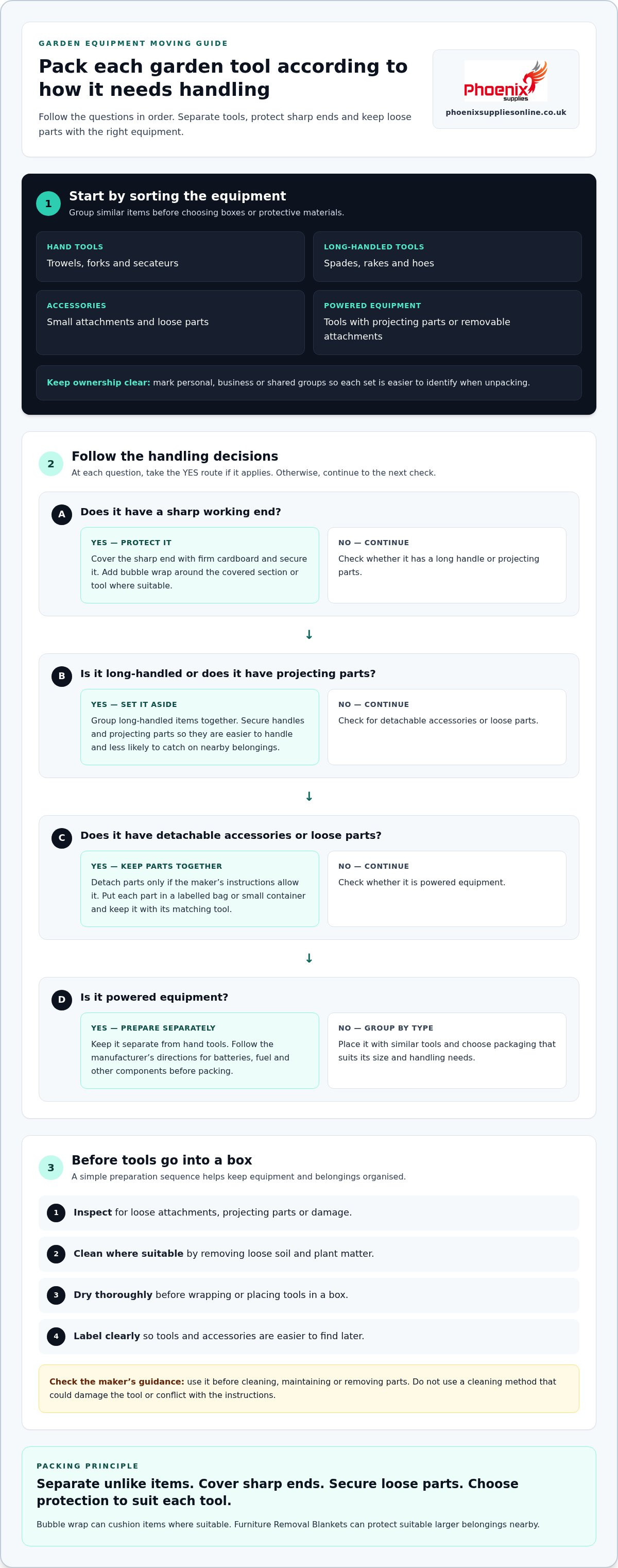
How to pack and load tools and garden equipment step by step
With tools prepared and grouped, choose packaging that suits the size, weight and shape of each group. The aim is to keep contents contained, limit movement and separate equipment from belongings that could be marked by contact. Use this checklist as you pack:
- Choose suitable boxes. Match moving boxes to manageable groups, rather than combining every tool in one container. Keep heavy tools in a box that’s practical to handle and avoid overfilling.
- Add protection where needed. Use bubble wrap or other suitable cushioning around parts that may rub or need extra protection. Keep sharp ends covered and projecting parts from catching on other items.
- Separate equipment from delicate belongings. Don’t pack tools loose alongside items that could be scratched or marked. Use Furniture Removal Blankets as a protective layer around suitable larger belongings.
- Contain small parts. Place accessories in a labelled bag or small container and keep them with their matching equipment.
- Label each box clearly. Note the contents and destination, such as “garden tools” and the room or storage area they belong in.
For more ideas on choosing supplies for a move, see this packing materials list for moving house.
What packing materials help protect tools?
Use boxes that keep small and medium groups together, with enough room for protective material around items that need it. Bubble wrap can cushion suitable tools or components, but it doesn’t replace a secure fit. For larger items, a Furniture Removal Blanket can provide a layer between the equipment and nearby belongings. Choose materials according to what you’re packing, and keep sharp or projecting parts from pressing against the box or other contents.
How can you keep packed tools secure and easy to find?
Before closing each box, check that the contents don’t shift freely and that accessories remain with their matching tools. Place heavier items securely at the base, with lighter items kept apart rather than pressed underneath. During loading, keep packed tools separate from belongings that could be marked or damaged by contact.
Webbing straps can help keep a grouped load together where appropriate. Use them to secure items, not to correct an unstable arrangement, and follow any instructions supplied with the straps. Keep labels visible so you can identify each group at a glance.
For boxes, bubble wrap, Furniture Removal Blankets and webbing straps to support your plan, browse moving and packing materials.
How to finish packing and make unpacking tools easier
A final check helps make sure each packed group is ready to move and easy to identify later. Confirm that boxes are closed, labels are readable and accessories are contained with the right tools. Keep a short inventory as you go, especially if you’re packing equipment for a household, business or shared workshop.
What should you check before moving packed equipment?
Before loading, check each container against its contents. The box should suit what’s inside, close securely and have a clear label showing its contents and destination. Make sure small attachments are in a bag or container, matched to their equipment, and not loose at the bottom of a box.
Note any items packed separately or that need careful handling. A simple list can include the box label, its contents and where it should go. For example, record that a particular box contains workshop hand tools, with attachments packed in a labelled bag inside. This gives you a quick reference without opening several boxes to find one item.
Keep the inventory brief and update it as you pack. If more than one person is involved, use consistent labels so everyone can follow the same system.
How can you plan for unpacking and storage?
Group packed equipment by its intended destination, such as the shed, garden or workshop. Mark the destination on the label as well as the general contents. This helps you direct each box to the right place and makes the overall pile easier to sort.
If you expect to need certain tools soon after the move, mark them as essential and keep their box accessible when loading. You’ll be able to identify it without opening every container. If it fits your loading plan, avoid placing it beneath other packed items.
For more guidance on choosing boxes and packing kits, read this guide to moving house packing kits in the UK. Boxes, bubble wrap and Furniture Removal Blankets can all support your packing plan. Choose boxes and protective materials that suit the equipment you’re preparing.
Get your garden tools ready for the move
A little preparation makes packing tools and garden equipment easier to manage. Sort items by type and handling needs, clean and dry them where appropriate, and follow the maker’s instructions. Cover sharp ends, secure projecting parts and keep small accessories with their matching tools. Before loading, check that boxes are closed, labels are clear and frequently needed equipment is easy to identify.
Choose boxes and protective materials to suit what you’re moving. Phoenix Supplies UK is a family-run business established in 1920, supplying boxes, bubble wrap, Furniture Removal Blankets and other packing materials. Ordering is straightforward, the website is easy to navigate, and helpful staff provide clear communication. Most orders placed by 1pm are dispatched the same day for free next working day delivery.
Browse boxes and protective packing materials to find supplies for your packing plan. With your tools grouped, protected and clearly labelled, you can approach moving day with greater confidence.
Frequently Asked Questions
How do you pack garden tools for moving?
Sort tools by type and size, then clean and dry them where suitable before packing. Cover sharp working ends, group long-handled items together and keep powered equipment separate from small accessories. Put loose parts in a labelled bag or container with their matching tool. Choose boxes that suit each group, secure the contents so they don’t shift and label each box with its contents and destination. This makes packing tools and garden equipment easier to manage.
Should you clean garden tools before moving house?
Yes, remove loose dirt where suitable and let tools dry before wrapping or boxing them. This helps prevent soil transferring to other belongings and avoids packing damp equipment. Cleaning methods can vary, so follow the equipment maker’s instructions and don’t use anything that could damage the item. Check the maker’s guidance for any maintenance or preparation needed before moving, especially for powered equipment and tools with removable parts.
How do you pack sharp tools safely?
Cover sharp working ends so they can’t catch on nearby items. A piece of cardboard secured around a blade or pointed end can provide a simple cover, with suitable cushioning such as bubble wrap around it if needed. Keep covered tools grouped together in a suitable box or container, and arrange them so they won’t slide around. Don’t leave sharp tools loose beside delicate belongings or small accessories.
Can garden tools go in moving boxes?
Yes, many garden tools can go in moving boxes if the box suits their size and contents. Pack manageable groups together, rather than mixing every tool in one container. Keep heavy items separate from light or delicate belongings, cover sharp ends and add cushioning where suitable. Before closing the box, check that tools and accessories are contained and won’t move freely. Label the box clearly so you can find it later.
How should you pack long-handled garden tools?
Group long-handled tools together and arrange them so handles and heads don’t catch on other belongings. Cover projecting or sharp parts, then use a suitable box or secure bundle to limit movement. If using a strap, make sure it’s appropriate for the grouped items and holds them together without creating an unstable arrangement. Keep long tools apart from fragile belongings, and label the group with its contents and intended destination.
How do you pack powered garden equipment for a move?
Pack powered equipment separately from hand tools, loose accessories and fragile belongings. Check the manufacturer’s instructions before cleaning, removing attachments or preparing the equipment. Follow its guidance for batteries, fuel and other parts, rather than relying on a general method for every machine. Keep detachable components together in a labelled container with the right equipment. Protect exposed parts with suitable cushioning where appropriate, and secure the item so it doesn’t shift.
What packing materials help protect tools during a move?
Use moving boxes suited to the size and weight of each tool group. Bubble wrap can cushion suitable items or parts that may rub, while Furniture Removal Blankets can provide a protective layer around larger belongings. Keep small accessories in labelled bags or containers, and use webbing straps only where appropriate to hold a grouped load together. The right materials depend on what you’re packing, so avoid forcing unlike items into one box.


