

Did you know that research shows roughly one in five people moving house report damage to their belongings? When your most expensive piece of tech is a fragile 65-inch OLED, that statistic feels incredibly personal. Most of us don't keep the bulky original packaging, which leads to a common panic about how to pack a tv for moving without original box whilst ensuring it survives the bumpy journey in a removal van.
We understand that the fear of a cracked panel or internal circuit failure is enough to keep any homeowner awake at night. The good news is that you don't need the manufacturer's cardboard to achieve a professional result; you just need to master the suspension packing method. This technique creates a rigid exoskeleton that neutralises transit vibrations and protects the delicate screen from pressure.
In this 2026 guide, we provide a clear, step-by-step approach to using heavy-duty double-wall boxes and removal blankets to secure your television. You'll learn exactly which materials provide the best protection and how to organise your packing process to guarantee a damage-free arrival at your new home.
Key Takeaways
- Learn why heavy-duty double-wall cardboard is essential for absorbing shocks and preventing panel damage during transit.
- Discover how to pack a tv for moving without original box by creating a 'suspension' system using professional-grade bubble wrap and removal blankets.
- Master the step-by-step process of disconnecting, labelling cables, and removing stands to ensure a secure, flush fit inside your moving box.
- Understand the "Golden Rule" of transport: why large screens must stay upright and how to use webbing straps to keep them stable in the van.
The Risks of Moving Large Screens Without Specialist Packaging
Modern televisions are engineering marvels designed for aesthetics and pin-sharp clarity, but they aren't built for the rigours of a removal van. As screens have become thinner, they've lost the structural rigidity that older, bulkier models once had. When you're learning how to pack a tv for moving without original box, it's vital to understand that you aren't just protecting against scratches. You're trying to replicate the complex internal engineering of a manufacturer's packaging.
Original boxes use custom-moulded polystyrene inserts to keep the screen in a state of "zero tension." Without these moulds, the weight of the television can cause the frame to flex, leading to fatal internal panel cracks. While a cosmetic scratch on the bezel is frustrating, an internal fracture usually means the unit is a total loss. Using a specialist large TV moving box provides a rigid exoskeleton that absorbs external pressure, ensuring that the vibrations of the road don't translate into a broken screen.
This concept of a "flight-ready" exterior is why professionals in the live events industry often turn to ProX for rugged cases designed to protect sensitive gear from the most demanding transport conditions.
The Vulnerability of OLED and Ultra-Thin LED Panels
OLED and ultra-thin LED panels are particularly susceptible to damage because they lack the thick glass layers of older displays. These panels can "flex" or twist during manual handling, which often results in "screen bleed" or permanent pixel failure. A common mistake occurs during the lifting process; applying even moderate "thumb pressure" to the bezel can be enough to snap the delicate internal layers. Specialist boxes are designed to prevent this by ensuring the unit remains perfectly upright and flat. They also act as a shield, preventing sharp objects amongst the rest of your belongings from piercing through to the screen during transit.
Why Standard Cardboard Boxes Often Fail
It's tempting to tape two standard packing boxes together, but this often leads to disaster. Most standard boxes are single-wall construction, which lacks the vertical strength to resist crushing. If a single-wall box is placed at the bottom of a stack or if the load shifts in the van, the cardboard can buckle. Puncture resistance is the most critical factor here. A heavy-duty double-wall box provides two layers of corrugated fluting, creating a much tougher barrier against the corners of other furniture.
Beyond physical impact, sensitive electronics need protection from the environment. Transitioning between a warm house, a cold van, and a new home can expose the TV to dust and moisture. Using professional materials like Bubble wrap and removal blankets inside a sturdy box creates a sealed micro-environment. This prevents debris from entering the vents and protects the internal circuits from dampness whilst your life is in transit.
Understanding the Anatomy of a Large TV Moving Box
When you're researching how to pack a tv for moving without original box, you'll quickly realise that not all cardboard is created equal. A specialist TV box is a heavy-duty piece of equipment designed to withstand the unique pressures of a removal van. The secret lies in the double-wall corrugated cardboard. Unlike standard boxes, these contain two layers of vertical fluting sandwiched between three layers of linerboard. This creates a series of air pockets that act as a high-performance shock absorber, neutralising vibrations that could otherwise shake internal components loose, a principle of structural integrity also championed by custom packaging experts like PacksDo.
Most professional solutions use a telescoping design. This consists of two heavy-duty sleeves that slide over one another. You can adjust the width to match your specific screen size perfectly. This adjustability ensures the box remains structurally sound without leaving excess empty space. This design also provides reinforced edges where the two layers overlap. It offers double the protection against corner impacts, which are the most common cause of screen fractures during a move.
Choosing the Correct Dimensions for Your Screen
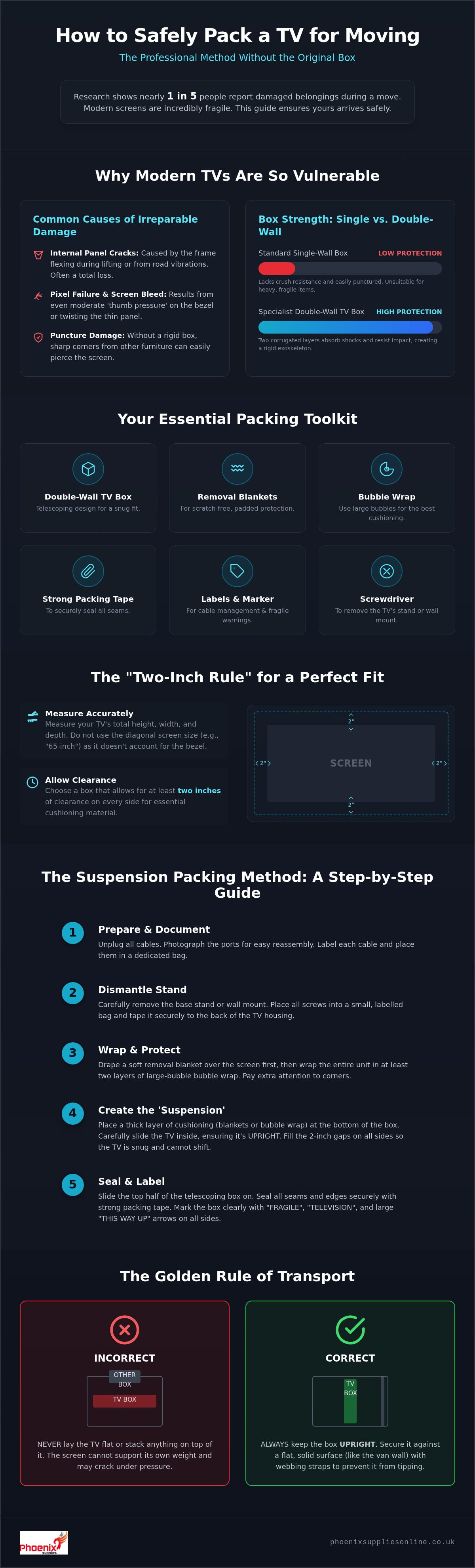
You must measure your television accurately before selecting a box. Don't just rely on the manufacturer's screen size, such as 65-inch, as this is a diagonal measurement. It doesn't account for the bezel or the depth of the unit. Measure the total height, width, and depth including any fixed stands. We recommend following the 'Two-Inch Rule': always choose a box that allows for at least two inches of clearance on every side. This space is vital for the internal cushioning that prevents the screen from touching the cardboard walls.
In the UK, common sizing categories include:
- 55-inch televisions: Usually require a medium-sized telescoping box.
- 65-inch televisions: Typically fit into a large specialist box.
- 75-inch and above: Necessitate an extra large TV moving box to ensure structural integrity.
Material Quality and Weight Capacities
Professional-grade British corrugated cardboard is rated by its 'burst strength'. This measures how much pressure the material can take before it ruptures. This is particularly important for older LED or Plasma models which often have heavy, centralised bases. You need to ensure the box's weight capacity exceeds the weight of your TV and its stand combined. Double-wall cardboard is the non-negotiable standard for any screen over 40 inches. This material ensures the box won't buckle under the weight of the television or the pressure of other items stacked nearby in the van.
Essential Packing Materials to Pair with Your Box
A sturdy box provides the outer structure, but the internal materials do the heavy lifting when it comes to shock absorption. If you're learning how to pack a tv for moving without original box, you must view the process as building a multi-layered safety system. The goal is to ensure the television doesn't move a single millimetre once it's sealed inside. Sourcing a complete kit from a specialist UK supplier is often the most efficient route. These kits typically include the specific grades of wrap and tape required to handle the weight of modern large screens.
Before you begin, clear a large, flat surface to act as your packing station. A dining table or a clean, carpeted floor is ideal. You'll also need high-tack packing tape. Standard office tape or low-quality alternatives will often peel away from the textured surface of heavy-duty double-wall cardboard. A professional-grade adhesive ensures the box remains rigid and the flaps stay closed, even if the van encounters a few potholes along the way.
Anti-Static Bubble Wrap vs Standard Polythene
Sensitive electronics are vulnerable to static discharge, which can occur when standard plastic films rub against the screen. Anti-static bubble wrap is treated to prevent this build-up, protecting your TV's delicate internal circuits. For a standard 65-inch screen, we recommend applying at least three to four full layers of wrap. This thickness provides a significant buffer against external impacts. A vital rule to remember: never apply adhesive tape directly to the screen surface or the bezel. Instead, wrap the television tightly and secure the bubble wrap to itself using tape on the outside of the plastic layers.
Foam Corner Protectors and Removal Blankets
The most effective way to protect a screen is to create a 'suspension' effect. Foam corner protectors are essential for this. They 'float' the TV within the box, ensuring the edges of the unit never actually touch the cardboard walls. This gap is your primary defence against corner impacts. Once the corners are on, professional-grade removal blankets UK are the trade's favourite tool for final cushioning. They are thick, reusable, and offer a level of padding that bubble wrap alone cannot match. We suggest folding a blanket to create a soft, impact-absorbing base layer at the bottom of the box before sliding the television inside. This ensures the unit has a cushioned landing and remains snug throughout the entire journey.
How to Pack Your Television: A Step-by-Step Guide
Packing a large screen is a methodical process that begins well before the box is taped shut. When you are figuring out how to pack a tv for moving without original box, the first step is to power down the unit and allow it to cool for at least thirty minutes. Disconnect all HDMI, power, and optical cables. We recommend labelling each one with a small piece of masking tape to make the setup at your new home much faster. Next, remove the stand or wall-mount bracket. Leaving the stand attached creates uneven weight distribution and prevents the unit from sitting flush inside the protective box.
Once the TV is stripped of accessories, place it face-up on a soft, clean surface. Wrap the screen in a non-abrasive layer, such as a cotton sheet, before applying the bubble wrap layers we discussed in the previous section. This prevents the plastic from leaving marks on the screen surface. When you're ready to move the unit into the box, always treat it as a two-person job. One person should support the base whilst the other steadies the top. Lower it gently into your prepared extra large TV moving boxes, ensuring it rests centrally on the base padding and foam corners.
Securing the Screen Surface and Bezel
Avoid the temptation to 'over-tape' the unit. Excessive tape can make the unboxing process dangerous, as you'll be forced to use scissors or a blade near the delicate bezel. Focus on securing the wrap to itself rather than the TV. Once the unit is inside the box, perform the 'No-Wobble' Test. Gently shake the box; if you feel the television shifting at all, add more removal blankets or bubble wrap into the voids until the unit is perfectly snug. Finally, seal the top flaps with three layers of high-tack tape and apply clear 'Fragile' and 'This Way Up' labelling on at least three sides of the box.
Managing Cables and Accessories
Never pack loose cables or the remote control directly against the screen. Even a small plastic plug-head can cause a pressure crack if the load shifts in the van. Coil your cables neatly and place them in a separate bag along with the stand screws. For a full breakdown of how to categorise these smaller items, refer to our packing materials list for moving. We suggest taping this accessory bag to the internal wall of the box or placing it in a clearly marked 'Essentials' carton so it isn't lost amongst the rest of your furniture.
Loading and Securing Your TV Box in the Removal Van
The hard work of wrapping and boxing is complete, but the transit phase is where most damage actually occurs. The Golden Rule of television transport is simple: keep it upright at all times. Modern flat-screens are not designed to support their own weight horizontally. If laid flat, the vibrations from the road can cause the centre of the panel to flex and eventually snap. When you're finalising how to pack a tv for moving without original box, you must ensure the box is loaded vertically and stays that way until it reaches its destination.
Strategic positioning in the van is your next priority. Place the box amongst other stable, heavy items that won't move. A common tactic is to wedge the TV box between a mattress and the side of the van, or against the bulkhead. To prevent the box from tipping during sharp turns, use webbing straps for moving to anchor it firmly to the van's internal rails. Never assume the weight of the box alone will keep it upright. A sudden brake could easily send it toppling if it isn't properly lashed down.
The "No Stacking" rule is non-negotiable. Even a relatively light box placed on top of your TV carton can create concentrated pressure points that lead to screen failure. Ensure that the top of your TV box is the highest point in that section of the load. This prevents any accidental crushing and keeps the double-wall structure of the box intact throughout the journey.
Creating a Safe Zone in the Removal Load
Try to place the TV box against a flat wall or the bulkhead of the van where there is less chance of other items shifting into it. We suggest using furniture blankets for moving as buffers between the box and other items. These blankets act as a final layer of shock absorption, preventing the corners of wardrobes or tables from rubbing against the cardboard. Keep the box away from heavy, unanchored items like washing machines or loose tools that could slide during transit and pierce the side of the carton.
Unpacking and Acclimatisation at Your New Home
Once you arrive, resist the urge to plug the TV in immediately. If the weather is cold, condensation can form inside the unit when it enters a warm house. You must wait for the TV to reach room temperature, which usually takes about two hours, before powering it on. When you are ready to unbox, use a shallow blade to cut the tape. Be careful not to plunge the knife deep into the box, as you could easily scratch the bezel or the screen itself. For more detailed advice on the final stages, consult our best TV moving box UK guide for professional unboxing tips.
Move With Confidence and Total Protection
Moving a large screen doesn't have to be a source of anxiety. By using the suspension method and high-quality materials, you've replaced the manufacturer's packaging with something equally robust. You now understand that structural rigidity and upright transit are the two essential pillars of a successful move. These professional techniques ensure that vibrations and external pressures don't stand a chance against your display, protecting both the delicate internal circuits and the external finish.
Mastering how to pack a tv for moving without original box ensures your tech arrives in the same condition it left. It gives you the peace of mind to focus on the rest of your house move without worrying about expensive panel failures. As a family-run business, we take pride in providing the expert UK support and specialist double-wall cardboard you need for maximum protection. Browse our range of heavy-duty TV moving boxes and packing supplies today and enjoy free delivery included on all orders. You've got the knowledge and the right plan; your television is in safe hands and ready for its new home.
Frequently Asked Questions
Can I move a 65-inch TV without the original box?
Yes, you can move a large screen safely by using a specialist telescoping box made from double-wall cardboard. When you are learning how to pack a tv for moving without original box, the secret is to replicate the manufacturer's internal support. By combining a heavy-duty box with anti-static wrap and foam corners, you create a protective exoskeleton that guards against panel flex and external impacts during the move.
Is it safe to lay a flat-screen TV down in a car or van?
No, it is never safe to lay a flat-screen television down during transit. These units are engineered to be stored and moved in an upright position to protect the delicate internal glass layers. Laying a TV flat makes the centre of the screen highly vulnerable to cracking from road vibrations or the weight of the panel itself. Always keep the box vertical and secure it firmly.
What size moving box do I need for a 55-inch television?
You will generally need a medium or large telescoping box specifically designed for flat-screen dimensions. It is vital to measure the full width and height of your 55-inch television, including the bezel and any fixed stands, rather than relying on the diagonal screen size. Ensure there is at least a 5cm gap on all sides to accommodate the removal blankets and bubble wrap needed for shock absorption.
Should I use bubble wrap or removal blankets to protect my screen?
For the highest level of protection, we recommend using both materials in a multi-layered approach. Start with several layers of anti-static bubble wrap to prevent static discharge and protect against surface scratches. Follow this with professional removal blankets to provide a thick, impact-absorbing buffer. This combination is the most effective way to ensure your screen survives the journey without internal circuit failure or external damage.
Why do TVs need to be transported upright whilst in a van?
Upright transport is essential because it allows the television's frame to support the weight of the internal components. When a screen is laid flat, the large surface area of the glass is unsupported in the middle. The constant bouncing and vibration of a removal van can easily cause the panel to flex and snap. Keeping the unit vertical ensures that all transit forces are distributed through the strongest parts of the frame.
How much does a heavy-duty TV moving box cost in the UK?
The cost of a heavy-duty box in the UK depends on the dimensions and the specific grade of cardboard used. Whilst a specialist double-wall box is a small investment, it is significantly cheaper than replacing a high-end OLED or LED screen. You should look for boxes that offer telescoping features and reinforced edges, as these provide the best value by ensuring your most expensive tech arrives at your new home safely.
What is the best way to secure a TV box inside a removal van?
The most reliable method is to anchor the box to the internal rails of the van using webbing straps. Position the TV box against a flat, stable surface, such as the van's bulkhead or a sturdy mattress, to prevent it from shifting. This prevents the box from tipping over during sharp turns or sudden braking. You must never stack other heavy items on top of the box, as this can crush the protective structure.
Can I reuse a TV moving box for other items like mirrors or art?
Yes, these boxes are incredibly versatile and can be reused for other fragile, flat items once your move is complete. The adjustable width and heavy-duty construction make them ideal for protecting large mirrors, framed artwork, or even glass table tops. If you store the box in a dry place, it serves as a dependable solution for any oversized fragile items that require extra protection from punctures or crushing in the future.


