

Your 65-inch television isn't just a screen; it's the heart of your living room and a significant investment that deserves more than a layer of thin plastic and a bit of luck. Most of us have felt that sharp pang of anxiety whilst watching a removal van pull away, wondering if our electronics will survive the journey. We agree that the fear of a screen cracking under pressure or the confusion over which box size actually fits your model is one of the most stressful parts of moving house. If you're currently staring at your wall-mounted display and wondering how to pack a large tv for moving without the original packaging, you aren't alone.
We promise to take that weight off your shoulders by showing you how to select the perfect heavy-duty protection and pack your TV like a seasoned professional. This guide provides a clear list of necessary materials, from double-wall boxes to specialised bubble wrap that won't leave permanent marks on your screen. We'll walk you through a simple, foolproof method that ensures your television arrives at your new home in perfect condition. You'll gain the confidence to handle the job yourself, knowing your tech is shielded by a structural barrier designed to redirect pressure away from the delicate glass.
Key Takeaways
- Understand why specialist double-walled containers are essential to protect modern OLED and LED screens from pressure and flexing whilst in transit.
- Master how to pack a large tv for moving by measuring external dimensions and accounting for stands to ensure a snug, secure fit.
- Learn the "Screen First" rule to ensure your glass surface is fully shielded with the right materials before it even touches the outer box.
- Discover how the slim profile of a TV removal box provides a versatile solution for transporting oversized mirrors, frames, and artwork safely.
- Recognise why investing in professional-grade packaging is a cost-effective way to safeguard your high-value electronics and reduce moving-day stress.
Why a Standard Cardboard Box Won’t Protect Your Television
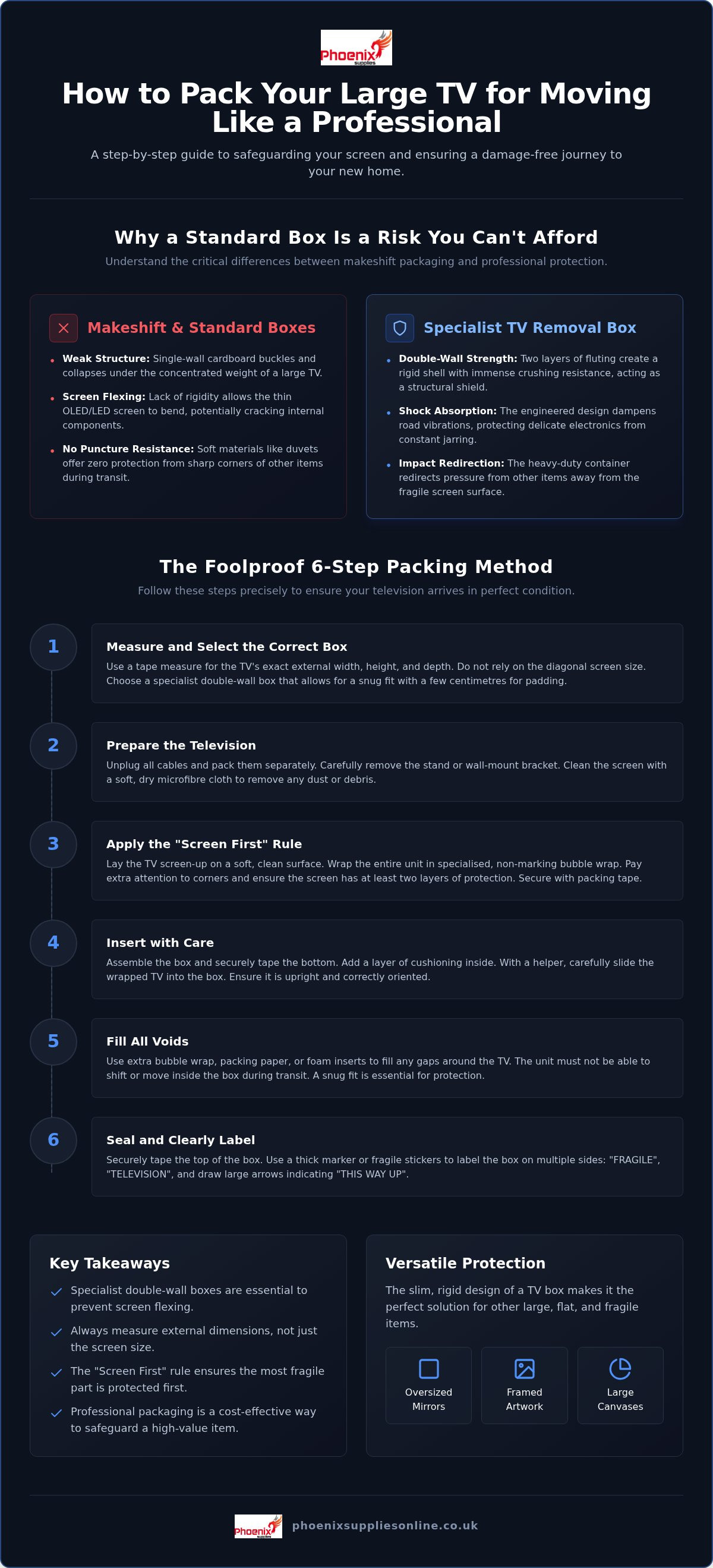
You might think any large container will do the job, but there is a significant difference between a standard shipping carton and a specialist TV removal box. A specialist large TV moving box is a heavy-duty, double-walled container specifically engineered to handle the unique weight distribution of modern electronics. Standard single-wall boxes, the kind you often find at supermarkets or from general deliveries, are designed for lightweight items. When you place a 65-inch television inside one, the cardboard often buckles under the concentrated weight. This leads to the box collapsing if another item is placed on top in the removal van.
Modern OLED and LED screens are incredibly thin. Whilst they look sleek on your wall, they are highly susceptible to flexing. If the frame bends even slightly during transit, the internal crystals or diodes can crack, rendering the entire unit useless. Knowing how to pack a large tv for moving starts with providing a rigid, impact-resistant outer shell that prevents this flexing from occurring in the first place.
The Science of Double Wall Protection
The secret to a safe move lies in the fluting. This is the wavy layer of paper sandwiched between flat liners. In a double-wall box, you have two layers of this fluting. This design creates a series of vertical columns that provide immense crushing resistance. It also acts as a shock absorber, dampening the vibrations of the road as the van travels. Double wall cardboard is the industry standard for fragile electronic transit.
This vertical strength is vital when your belongings are packed into a van. Furniture shifts during transit, and a box that can't withstand downward pressure will quickly fail. By using a specialist box, you're creating a structural shield that keeps the weight of other items off your delicate screen.
Risks of Using Makeshift Packaging
It's tempting to wrap your screen in a duvet and hope for the best. However, fabric offers zero puncture or crush resistance. If a sharp corner of a bedside table shifts in the van, it will go straight through the duvet and into your screen. Using professional cushioning for fragile items inside a rigid outer shell is the only way to ensure safety. The box provides the "bones" of the protection, whilst the wrap provides the "skin."
Many people try to reuse the original box. If that box has spent three years in a damp garage or a dusty loft, the fibres have likely broken down. It becomes brittle and loses its structural integrity. When you consider the cost of replacing a high-end 4K television, which can easily run into thousands of pounds, the small investment in a specialist box is a sensible choice. Learning how to pack a large tv for moving effectively means acknowledging that your screen is only as safe as the container you put it in.
Choosing the Correct Size and Strength for Your Screen
Selecting the right container is the first step in learning how to pack a large tv for moving without risking a disaster. Many people rely on the screen size mentioned on the original retail box, but this can be misleading. A 55-inch television refers only to the diagonal viewable area of the glass. It doesn't account for the plastic frame, known as the bezel, or the speakers built into the sides. Get a tape measure. You need the exact external width, height, and depth in centimetres to ensure the box provides a snug fit. If the box is too large, the TV will shift during transit; if it's too small, you won't have room for protective padding.
Don't forget to account for the stand. Most modern screens sit on wide, flared legs or a heavy central pedestal that adds significant depth to the unit. We always recommend removing the stand entirely and packing it separately. This allows the TV to maintain a slim profile that fits securely within a specialist removal box. If your model is an older plasma unit, be aware that these are much heavier than modern LED screens. You must check that the box has a high burst strength to prevent the bottom from giving way whilst it's being carried.
A Guide to Standard TV Box Dimensions
Standard box sizes usually align with the most popular UK television models. For a 55-inch screen, you'll typically need a box that allows for at least 125cm in width. If you've stepped up to a 65-inch display, that requirement often increases to 145cm or more. Modern ultra-wide bezels can catch you out, so always add a small buffer for your wrapping materials. This measurement is the most common mistake made when people plan how to pack a large tv for moving. You can find a detailed size chart in our guide to the best TV moving box UK to ensure you get the right fit the first time.
Assessing the Strength of Your Packaging
A box's strength is determined by the grade of the cardboard and the quality of the adhesive used between layers. At Phoenix Supplies UK, we prioritise heavy-duty double wall construction because we know how much these electronics cost to replace. Unlike generic high-street retailers who often sell thin, single-wall alternatives, we focus on materials that won't buckle under the weight of a 40kg unit. As a family-run specialist, we take pride in offering the same professional-grade materials used by removal experts across the country. If you need a reliable solution, our Extra Large TV Moving Boxes provide the robust protection your home cinema deserves.
How to Pack Your Large TV Like a Professional
Packing an expensive television requires a methodical approach. It's not just about getting it into the box; it's about ensuring it doesn't move once it's there. Knowing how to pack a large tv for moving like a professional means focusing on the details that most people overlook. Begin by cleaning the screen with a dry microfibre cloth. Dust particles might seem harmless, but under the pressure of packing materials, they can act like sandpaper and cause fine scratches during transit. Unplug all cables and remove wall-mount brackets carefully. Tape the screws to the back of the bracket or place them in a clearly labelled bag so you aren't hunting for them at the other end.
The "Screen First" rule is the most important part of this process. Before the TV even gets near the cardboard, you must create a soft barrier. This prevents the pressure of the outer box from creating permanent marks on the delicate display. By following a structured system, you can move your tech with the same confidence as a specialist removal crew.
The Five-Step Packing Method
This structured approach is the safest way to understand how to pack a large tv for moving when you no longer have the original manufacturer's inserts.
- Step 1: Wrap the entire unit in a non-abrasive layer. A soft removal blanket is ideal for this. It provides a thick cushion that prevents the plastic of the bubble wrap from touching the screen directly.
- Step 2: Add a generous layer of bubble wrap over the blanket. Ensure the bubbles face outwards. This keeps the flat side against the blanket and provides maximum impact resistance.
- Step 3: Slide the TV into your double-walled box. This is a job for two people. One person should hold the box steady whilst the other carefully lowers the TV to avoid tilting or dropping it.
- Step 4: Fill any remaining gaps. Use packing paper or foam corners to ensure the TV cannot shift left or right. You want to create a "floating" effect where the unit is suspended in the centre of the box.
- Step 5: Seal the box with heavy-duty tape. Use "This Way Up" and "Fragile" tape on at least two sides of the box to ensure the removal team handles it correctly.
Avoiding Common Packing Mistakes
Many people make the mistake of applying adhesive tape directly to the television frame or the screen itself. Over time, the adhesive can bond with the finish, leaving marks that are impossible to remove. Always tape your wrapping materials to each other, never to the TV. Another common issue is the "bubble wrap mark." If you wrap plastic directly against the glass in a warm van, the circular patterns can transfer to the screen. Using a removal blanket as your first layer completely eliminates this risk. If you're unsure what you need, check our packing materials list for moving to gather all your essentials before you start.
Multi-Purpose Use: Mirrors, Frames, and Artwork
Whilst you're researching how to pack a large tv for moving, you'll discover that these specialist containers are incredibly versatile. The slim, telescopic design of a large TV box makes it a perfect candidate for transporting oversized mirrors, large gallery frames, and delicate artwork. Because these items share a similar flat, fragile profile with electronics, they benefit from the same rigid double-wall protection that prevents flexing and impact damage during the journey.
For oil paintings, the packing process requires a slightly different approach to ensure the longevity of the piece. You shouldn't wrap these directly in plastic bubble wrap, as the paint needs a degree of airflow and can sometimes bond with the plastic in a warm removal van. Instead, use acid-free paper as a non-stick first layer. When dealing with heavy glass-fronted frames, your priority is preventing shards from scattering if the glass breaks. Applying low-tack tape across the glass surface helps hold pieces together, protecting the artwork underneath. Once inside the van, these slim boxes should always be stored vertically. Wedge them between heavy, stable items like a wardrobe and the van wall to prevent them from sliding or toppling whilst the vehicle is in motion.
Packing Mirrors Safely
Mirrors are notoriously fragile and sensitive to the vibrations of a moving vehicle. To provide structural integrity, use the "X tape" method by applying two long strips of masking tape across the glass from corner to corner. This simple step dampens vibrations and keeps the glass from flexing under pressure. You should also use foam edge protectors to safeguard the corners of the frame before sliding it into your box. Always remember that mirrors, much like televisions, must be packed and carried vertically. Packing them flat is a recipe for pressure cracks, especially if other items shift during the move. Even if you've already learned how to pack a large tv for moving, using the same specialist boxes for your mirrors will save you from a messy cleanup later.
Storing Artwork Long-Term
If your move involves a stint in a storage unit, the quality of your cardboard becomes even more important. High-grade double-wall cardboard acts as a vital barrier against dust and moisture, which can ruin valuable prints and family photos over time. These boxes are built to last, meaning they can even be repurposed after your move. A repurposed TV box provides a sturdy, slimline solution for storing large-format professional documents or architectural plans that must remain flat. If you have a collection of gallery pieces to protect, you can order specialist moving boxes to ensure your entire home gallery arrives in perfect condition.
Why Quality Packaging is a Smart Investment
When you consider the cost of a modern 4K or OLED television, which often ranges from £800 to well over £2,000, the price of a professional removal box is a very small price to pay for peace of mind. Investing in the right materials is the most effective insurance policy you can have. Whilst many people focus on the logistics of the van or the timing of the keys, the real success of a move depends on the condition of your belongings when they are unpacked. A high-quality box doesn't just hold your TV; it provides a structural guarantee that your expensive tech won't be the victim of a simple bump in the road.
There is also a clear environmental benefit to choosing professional-grade materials. Cheap, single-wall boxes are often one-use items that tear or collapse during their first journey. In contrast, heavy-duty double-wall boxes are designed for durability. You can easily collapse them after your move and store them for future use, or pass them on to a friend who is moving house. Because they are made from high-quality kraft paper, they are also fully recyclable once they finally reach the end of their long life. Choosing quality over convenience reduces waste and ensures your packaging doesn't end up as landfill after a single day of work.
The Value of Expert Advice
At Phoenix Supplies UK, we take pride in being more than just an e-commerce site. We are a family-run specialist team that understands the genuine stress of moving house. When you call our office, you won't be met by an automated chatbot or a sterile call centre. You'll speak to someone who knows exactly which box fits a 65-inch curved screen and can help you customise your order. Whether you need a single specialised container or full moving house packing kits UK for your entire home, we prioritise personal service to ensure you get exactly what you need.
Ready for Your Move?
Before you seal your large TV moving box for the final time, run through a quick mental checklist. Ensure the screen is wrapped in a removal blanket, the cables are organised, and the box is filled so nothing can shift. We provide national delivery across the UK to make sure your supplies arrive well before your moving date. Our goal is to make the process as straightforward and stress-free as possible. By taking the time to learn how to pack a large tv for moving and using the right tools for the job, you can focus on the excitement of your new home rather than worrying about the safety of your electronics. We are here to guide you every step of the way, providing the reliable support you need for a successful move.
Secure Your Screen for a Stress-Free Move
Moving an expensive television doesn't have to be a source of anxiety. By choosing a heavy-duty, double-wall container and following the professional "Screen First" rule, you've already done the hard work to prevent cracks and pressure marks. Remember that specialist boxes aren't just for electronics; they are equally effective for protecting your large mirrors and framed artwork. Understanding how to pack a large tv for moving is simply about having the right tools and a methodical approach.
As a family-run UK business, we take pride in helping our neighbours move safely. Our high-strength double wall cardboard options are designed specifically to withstand the rigours of national transit. Browse our range of Extra Large TV Moving Boxes at Phoenix Supplies UK and enjoy free national delivery included with your order. You've got the plan and the knowledge. Now, take that final step to ensure your home cinema arrives at your new house in perfect condition. Happy moving.
Frequently Asked Questions
Do I really need a specialist box for my TV, or is a blanket enough?
A specialist box is essential because a blanket alone offers no protection against punctures or crushing. Whilst removal blankets are excellent for preventing surface scratches, they cannot stop the weight of other furniture from pressing against your screen in a moving van. A double-walled TV box provides a rigid outer shell that redirects pressure away from the delicate glass. This structural barrier is the only way to ensure your television survives the journey safely.
What size box do I need for a 65-inch curved TV?
You need a box that accommodates the extra depth of the curve and the external width of the frame. A 65-inch screen measurement only refers to the diagonal display area. For a curved model, you must measure the widest point from front to back to ensure the box doesn't press against the screen glass. Our Extra Large TV Moving Boxes are designed with generous dimensions to provide the necessary clearance for these wider designs.
Can I pack more than one item in a large TV moving box?
You can pack multiple slim items like mirrors or picture frames if there is enough room for protective padding between them. However, you should never pack heavy or bulky items alongside your television. Overcrowding the box increases the risk of internal shifting, which can lead to screen damage. If you are packing multiple frames, ensure each one is individually wrapped in bubble wrap and separated by a dedicated layer of cardboard.
How do I prevent bubble wrap from leaving marks on my screen?
The best way to prevent plastic patterns from transferring to your glass is to use a non-abrasive first layer. Wrap the screen in a soft removal blanket or acid-free paper before applying bubble wrap. This prevents the plastic from making direct contact with the screen in a warm van. When learning how to pack a large tv for moving, this "Screen First" rule is vital for maintaining the pristine finish of your display.
Is it safe to lay a TV box flat in the removal van?
No, you should always store and transport a TV box in an upright, vertical position. Modern LED and OLED screens are not designed to support their own weight when laid flat. Vibrations from the road can cause the glass to flex and crack if the unit is horizontal. Secure the box between heavy, stable items like a wardrobe and the van wall to ensure it remains upright and stable throughout the trip.
Should I remove the stand before putting the TV in the box?
Yes, we strongly recommend removing the stand or pedestal before packing. Removing the legs allows the television to maintain a slim profile that fits securely within the double-wall box. It also prevents the stand from putting uneven pressure on the bottom of the screen during transit. Keep all screws and brackets in a labelled bag taped to the back of the TV so they are easy to find when you arrive at your new home.
What happens if my TV is slightly larger than the box dimensions?
You should never force a television into a box that is too small. If the screen touches the sides of the cardboard, there is no room for the cushioning needed to absorb shocks. If your model is slightly larger than a standard size, look for a telescopic box or an Extra Large TV Moving Box that provides at least a 5cm buffer on all sides. Proper spacing is essential for a safe move without screen pressure.
Are these boxes strong enough for courier shipping as well as moving house?
Yes, our double-walled boxes are engineered to meet the high standards required for national courier shipping. The two layers of fluting provide the burst strength and impact resistance needed to handle automated sorting systems and long-distance transit. When you are planning how to pack a large tv for moving with a courier, ensure you use heavy-duty tape and generous padding to fill all internal voids for maximum security during the journey.


