

Will a standard cardboard box protect your TV? It can, if it fits the screen and the TV is packed to prevent movement. The right flat screen TV packaging box does more than cover the display: it helps keep the television upright and cushioned against knocks and vibration during a house move or courier journey.
It’s understandable to worry about a cracked screen or hidden damage to internal components. Choosing the right size can also be tricky, particularly with ultra-thin and curved TVs, which may not fit safely in a box that’s too small or too large.
This guide explains what to look for in a heavy-duty, double-wall TV box and how to prepare the screen, protect the corners and fill gaps with padding. You’ll also learn why keeping your TV upright matters during transit. Phoenix Supplies UK is a family-run supplier of Extra Large TV Moving Boxes, alongside bubble wrap and removal blankets, so you can find practical packing supplies in one place.
Key Takeaways
- Choose a flat screen TV packaging box by checking your television’s physical width and height, not just its diagonal screen measurement.
- Learn what to look for in a double-wall box and why box strength matters when protecting electronics.
- Follow a clear packing sequence to protect the screen before placing your television in its box.
- Allow room for protective padding without leaving excessive space around the TV.
- See how Extra Large TV Moving Boxes, bubble wrap and removal blankets from Phoenix Supplies UK can help you prepare for a move.
Why a Specialist Flat Screen TV Packaging Box is Essential
A modern television may be light to carry, but its wide, thin display needs careful protection. LCD and OLED panels use different display technologies, yet both can be vulnerable to concentrated pressure, knocks and movement in transit. You can read more about the fragile construction of flat-panel displays and why the screen needs support across its surface, rather than pressure on one point.
A specialist flat screen TV packaging box is designed to help protect a large, delicate item during handling and transport. The box is only one part of that protection: the television also needs suitable padding so it can’t shift inside. In an oversized box, the TV may move and transfer bumps to its corners or screen. In a box that’s too tight, there may not be enough room for protective materials.
The Risks of Inadequate Packaging During Transit
Pressure on the display can cause it to flex. A screen that bends or takes a direct impact may suffer lasting damage, including picture faults. Road vibration and repeated knocks add to the risk, particularly when the TV is loose inside its packaging.
Boxes can also be compressed if other items are stacked against them in a vehicle. A weaker box may offer less resistance to that pressure. Keep the television upright during transit and don’t place heavy items on top of it. Padding should hold it steady without pressing against the screen.
Standard Boxes vs Heavy-Duty Double-Wall Cardboard
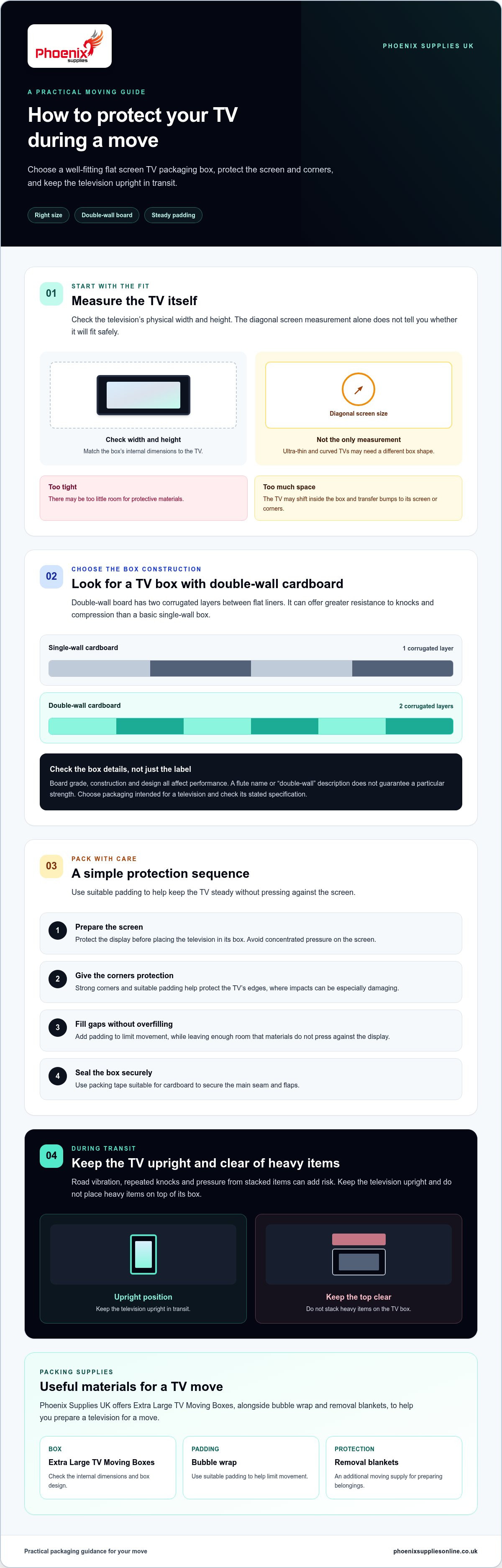
Single-wall cardboard has one corrugated layer between its outer faces. Double-wall cardboard has two corrugated layers, separated by a flat liner. That extra structure can provide greater resistance to knocks and compression than a basic single-wall box, although the protection depends on the board and how the box is made.
Terms such as “BC flute” describe a particular combination of corrugated layers. Don’t assume every double-wall TV box uses that construction or meets a particular burst-strength rating. Check the box details and choose packaging intended for a television, rather than relying on a description alone.
Paper grade also matters, but “kraft” and “test” aren’t enough on their own to confirm how a box will perform. Look for clear information about the box’s construction and intended use. Strong corners and secure flaps help protect the TV’s edges, where impact can be especially damaging. Fully overlapping flaps may add support when present, but don’t assume every box has them unless its description confirms it.
A well-chosen box and suitable padding help reduce the chance of damage and the disruption of arranging a repair or replacement. Phoenix Supplies UK sells Extra Large TV Moving Boxes, with bubble wrap and removal blankets available to help you prepare your television for a move.
The Anatomy of Professional TV Moving Boxes
A television box works as a protective shell, but its strength depends on several details working together: corrugated layers, sound liners, secure flaps and well-sealed seams. These details matter for modern OLED screens, which can be very thin, and curved displays, which may not sit safely in a box made for a different shape. Check the box’s internal dimensions and design, not just its label.
Double-Wall Construction and BC Flute
Double-wall cardboard has two corrugated layers between flat paper liners. The fluting helps absorb some knocks and supports the box’s shape, while the liners help resist tearing and punctures. BC flute combines two corrugated profiles in one board and may be used in specialist packaging where extra support is needed. It isn’t a guarantee of performance, so check the box specification rather than relying on the flute name alone.
A well-made box is less likely to bow under ordinary handling or light stacking than a single-wall alternative, but don’t treat it as stack-proof. Keep heavy items off the television box. If you’re packing other bulky belongings, use suitable large moving boxes for those items instead.
Liners, Flaps and Sealed Seams
Kraft paper is often chosen for its strong outer surface, while recycled liners can also be made to meet different packaging needs. The paper name alone doesn’t tell you how well a finished box will perform. Look for clear construction details and a box intended for a television. Recyclable cardboard can provide practical protection, but strength depends on the board grade and box design.
Overlapping flaps can add extra layers at the top and base when folded and sealed. This helps reinforce areas that may be pressed during handling. Use good-quality packing tape that’s suitable for cardboard, and seal the main seam and flaps securely. Tape supports the closure; it can’t make an unsuitable or damaged box safe for a heavy screen.
“Burst strength” describes how much pressure a board can withstand before it ruptures. There isn’t one rating that guarantees a box will suit every television, because the screen’s weight, dimensions, packaging and handling all affect the demands on the box. Check the supplier’s stated rating and intended use, and don’t assume a particular test figure is standard for all TVs.
For practical packing guidance, see this guide on how to pack a TV for moving. Phoenix Supplies offers Extra Large TV Moving Boxes alongside bubble wrap and removal blankets. You can browse TV moving boxes and packing supplies to find materials for your move.
Choosing the Correct Size for Your Television
A TV’s advertised size is the diagonal measurement of its screen, not the width or height of the television. Two TVs with the same diagonal measurement can have different outer dimensions, especially if they have different frames, stands or curved screens. Choose a flat screen TV packaging box using the television’s physical measurements and the space needed for padding, rather than the screen size alone.
How to Measure Your TV for the Right Fit
Measure the television itself before choosing a box. If you plan to leave the stand attached, include it in your measurements. If you can remove it safely, pack it separately and measure the TV without it.
- Width: Measure across the widest point of the frame.
- Height: Measure from the top edge to the bottom edge.
- Depth: Measure from the front of the screen to the furthest point at the back. Include the stand if it will stay attached.
Allow around 50mm of padding on each side when checking the box’s internal dimensions. As a starting point, add about 100mm to the TV’s width, height and depth, then check that your chosen padding will fit without being compressed. Include the thickness of bubble wrap or other protective material in your calculation. Always check the box’s internal, not external, measurements.
A 32, 43, 55 or 65-inch label refers to the screen’s diagonal measurement. It doesn’t give you the TV’s exact width, height or depth. Measure your own set, as dimensions vary between models. For further guidance on transporting a flat screen TV safely, check the handling advice before you pack.
Curved TVs and Slim OLED Screens
Curved models need enough depth and clearance for the full arc of the screen and casing. Don’t force the TV into a box that presses against the curve. Slim OLED models also need careful support: avoid putting pressure on thin edges or allowing the screen to flex. Padding should cushion the set, not squeeze it.
Removing a detachable stand can make measuring and packing easier, but follow the manufacturer’s instructions and keep the stand and fixings together. Don’t rely on a screen-size threshold. Check how your particular TV sits and whether its stand can be removed safely.
A box that’s too large can let the television shift in transit. Choose one with room for protective padding, then fill gaps so the TV stays secure. Phoenix Supplies offers Extra Large TV Moving Boxes and bubble wrap. You can browse TV moving boxes for your move.
Step-by-Step Guide: How to Pack Your TV Like a Professional
Protect the screen before placing the television in its box. This screen-first approach gives the most delicate part of the set its own cushioning layer, then secures the whole TV so it can’t shift inside the packaging.
Wrap and Cushion the Screen
- Prepare the TV. Switch it off, unplug cables and remove the stand if the manufacturer’s instructions allow. Keep screws and fittings together.
- Cover the screen. If suitable anti-static material is available, wrap the television in it first. Add a soft, clean layer, such as a removal blanket, between the screen and bubble wrap. Avoid placing bubble wrap directly against the display.
- Wrap the whole set. Use a “mummy wrap” technique, overlapping each layer and securing the material around the back. Cover the bezel and edges too, but don’t pull the wrapping tight enough to press on the screen.
- Protect the corners. Fit edge protectors or foam corners to cushion the TV’s most exposed points and help reduce the force of knocks.
Use enough bubble wrap to cushion the television without making it too wide for the box. Before boxing the TV, check that the screen and corners remain covered and that no tape touches the display.
Close the Box and Load the TV Upright
Set the wrapped TV into a suitable flat screen TV packaging box, with protective material around it to limit movement. Fill any remaining gaps without forcing padding against the screen. Close the flaps and use the “H-taping” method: tape along the centre seam, then across both end seams so the tape forms an H. Choose tape made for securing cardboard and press it firmly into place.
Keep the TV upright throughout the move. Don’t lay it flat: the screen can flex under its own weight, and vibration during transport may increase the risk of damage. Position the box securely against a stable side of the vehicle, with no heavy items resting on it. If using webbing straps, secure the box without tightening them so much that they crush the cardboard.
Phoenix Supplies stocks Extra Large TV Moving Boxes, bubble wrap and removal blankets. Choose TV boxes and protective packing materials for your move.
Where to Buy Quality TV Moving Boxes in the UK
When choosing a supplier for a television move, look for one that specialises in moving boxes and provides clear product details so you can compare them with your screen’s dimensions. Phoenix Supplies is a family-run UK business supplying moving materials nationwide, including Extra Large TV Moving Boxes. Free delivery is included on orders.
Getting your box and protective materials from one supplier can make it easier to organise what you need. The guide to moving house packing kits explains how to plan boxes and packing materials for a move. Check your television’s measurements against the box’s internal dimensions, particularly if you have a large or curved screen. For courier journeys, confirm that the box meets the carrier’s current size limits before ordering.
Help from a Family-Run Specialist
Buying a flat screen TV packaging box from a specialist can help you find packaging intended for a large, delicate item, rather than making do with a general-purpose carton. Phoenix Supplies sells Extra Large TV Moving Boxes, as well as other moving supplies. Whatever box you choose, safe packing still depends on the right fit, suitable padding and careful handling.
An Extra Large TV Moving Box may suit a larger home cinema screen, but don’t rely on a screen-size label alone. Measure your TV’s width, height and depth, including any stand that will remain attached, and compare those figures with the box’s internal dimensions. If your screen is unusually large or shaped, contact the team to ask about product suitability and delivery details. A human point of contact can help you get clear answers before you order.
Get Your Packing Materials Together
Alongside the box, plan for the materials needed to protect and secure your television. Phoenix Supplies sells bubble wrap and mattress and furniture covers, as well as removal blankets. You’ll also need suitable packing tape to seal the carton. Check the supplier’s range if you need tape, as it isn’t listed among the products offered here.
Ordering the box and protective materials together can make it simpler to prepare for packing, rather than sourcing each item from a different place. Browse the range of TV moving boxes and packing supplies to find options for your move.
Pack Your TV with Confidence
A safe move starts with a box that fits your television and enough padding to keep it secure. Measure the TV’s physical dimensions, allow room for protective materials and choose a double-wall box designed for the job. Wrap the screen carefully, fill gaps to prevent movement and keep the television upright throughout transit.
The right flat screen TV packaging box is one part of a careful packing plan. Phoenix Supplies is a family-run UK business offering Extra Large TV Moving Boxes, alongside bubble wrap and removal blankets. Free delivery is included on orders.
Ready to prepare your television for its journey? Browse Phoenix Supplies’ TV moving boxes and protective packing materials for your move. With the right box and a little care, you can set off feeling more confident about protecting your screen.
Frequently Asked Questions
Can I move my flat-screen TV without the original box?
Yes, you can move a TV without its original box by using a suitably sized, double-wall TV box and protective padding. Wrap the screen with a soft layer before adding bubble wrap, protect the corners and fill gaps so the set can’t shift. Choose a box that fits the TV’s physical dimensions, not just its screen-size label. Keep the television upright throughout the journey.
Why is it dangerous to lay a flat-screen TV flat during a move?
Laying a flat-screen TV flat can leave the display more vulnerable to flexing under its own weight. Road vibration or a knock can add pressure and lead to screen damage. Transport it upright, supported securely in its box, and don’t place heavy items on top. If you’re unsure how to position your model, check the manufacturer’s handling instructions before packing and loading it.
What size box do I need for a 55-inch TV?
A 55-inch measurement describes the screen’s diagonal, not the TV’s width, height or depth. Measure the outer frame at its widest and tallest points, then measure the depth, including the stand if it will remain attached. Compare these figures with the box’s internal dimensions and allow room for padding on every side. TV sizes vary by model, so don’t choose a box by diagonal measurement alone.
Is bubble wrap safe to put directly on a TV screen?
It’s better not to place bubble wrap directly against the screen. First cover the display with a clean, soft protective layer, such as suitable foam or a removal blanket. Then wrap the whole television in bubble wrap, taking care not to pull it tight enough to press on the screen. Keep tape away from the display and make sure the corners and frame are covered before boxing the TV.
Do I need a double-wall box for a small 32-inch TV?
A double-wall box is a sensible choice for a small TV if it fits securely and leaves room for protective padding. The box should be designed for a television or provide suitable support for the set’s size and weight. A smaller screen still needs protection from knocks and movement. If using another box, check that it’s in good condition and that the TV can be kept upright inside it.
How much padding should I use inside the TV packaging box?
Allow around 50mm of padding on each side as a practical starting point, while checking that the box’s internal dimensions can accommodate both the television and wrapping. Add cushioning around the corners and fill empty spaces so the set can’t move. Padding should hold the TV steady without pressing hard against the screen. If your TV is curved or unusually slim, take extra care to avoid pressure on its display or edges.
Can I use a TV box to move large mirrors or framed artwork?
You may be able to use a TV box if the mirror or artwork fits securely and the packaging protects its full surface and edges. Measure the item and compare it with the box’s internal dimensions. Add suitable cushioning to prevent movement, and don’t force an oversized frame into a tight fit. A box intended for a TV may not suit every mirror or artwork, so assess its shape and protection needs first.
What is the best way to secure a TV box inside a removal van?
Keep the boxed television upright and place it against a stable side of the van, where it won’t slide or be struck by other items. Use webbing straps if available, securing the box without tightening them enough to crush the cardboard. Keep heavy belongings away from it and don’t stack items on top. Check that the TV remains upright and secure before setting off and after any necessary rearrangement.


