

What if the most valuable items in your removal van aren't the expensive electronics, but the thin sheets of paper that prove who you are and what you own? Most people feel a genuine sense of worry when they think about birth certificates, tax records, or house deeds getting lost or crushed under a pile of heavy kitchenware. It's a common stress, especially when you aren't sure which containers can actually handle the weight of a full office's worth of paperwork. You need a solution that is as dependable as it is simple.
Using dedicated archive boxes for moving house is the most effective way to ensure your irreplaceable documents survive the journey intact. In this 2026 relocation guide, you'll discover how to choose the right professional-grade boxes and organise your files like an expert. We will cover everything from sizing for lever arch files to smart stacking techniques that keep your data secure and your mind at ease. By the time you've finished reading, you'll have a clear plan to keep your records safe and accessible from the moment you pack to the day you unpack in your new home.
Key Takeaways
- Learn why standard containers often fail under the weight of paper and how archive boxes protect your records from transit stress.
- Understand the importance of double-wall corrugated cardboard and reinforced handles for maintaining the structural integrity of your files.
- Discover why specialised archive boxes for moving house are more cost-effective than using standard boxes that risk collapsing.
- Master the "Essential Documents Box" strategy to ensure your most vital paperwork is always accessible during and after your move.
- Explore how bulk purchasing from a family-run specialist can simplify the packing process for large home offices and commercial moves.
Why Archive Boxes are Essential for Moving House in 2026
An archive box is far more than a simple cardboard container with a lid. It is a specialised piece of equipment designed to handle the unique density of paper. Whilst a standard moving box might be fine for pillows or plastic toys, it often lacks the structural strength required to transport hundreds of documents safely. Choosing archive boxes for moving house ensures your most vital records remain protected from the physical pressures of a relocation journey.
Moving day involves a phenomenon known as "transit stress." This includes the constant vibrations of the removal van, the pressure of vertical stacking, and the risk of shifting loads. When you consider the value of house deeds, birth certificates, and historical contracts, the container they travel in becomes your primary line of defence. Professional-grade archive boxes create a uniform system that fits perfectly into a removal van, allowing for efficient, stable stacking that maximises space without risking a collapse.
The Risk of Using Standard Cardboard Boxes
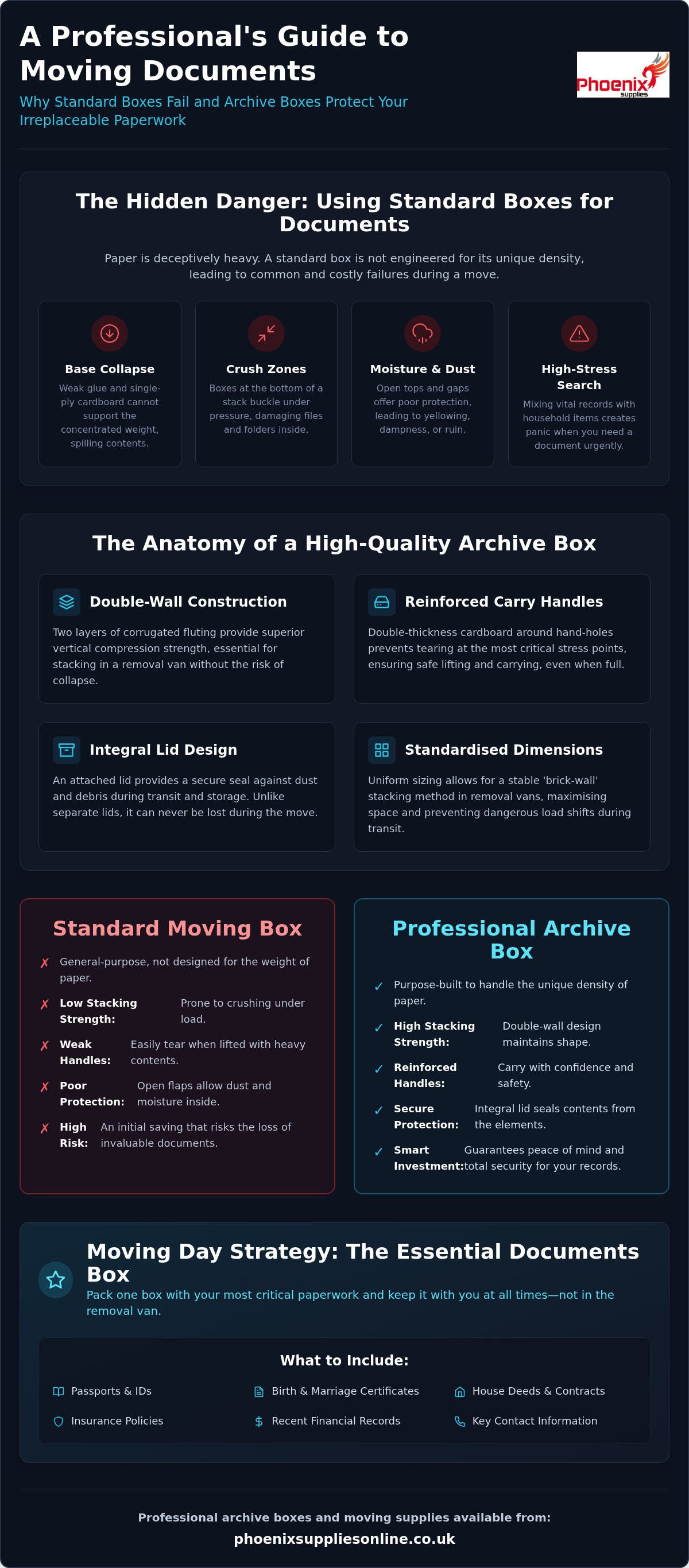
Paper is deceptively heavy. A single stack of A4 sheets can weigh several kilograms; filling a large standard box with files often leads to a weight that the glue and tape on the bottom cannot support. We often see standard boxes fail at the base, spilling sensitive documents across a wet driveway or a dusty van floor. There is also the danger of "crush zones." In a fully loaded van, boxes at the bottom of a stack must bear the weight of everything above them. Standard boxes often buckle under this pressure, whereas archive boxes are built to maintain their shape.
Environmental factors also play a role. Standard boxes often have open tops or gaps that allow moisture and dust to enter. This can lead to yellowing or dampness, which is disastrous for long-term records. Using a box with an integral or separate lid provides an extra layer of protection against the elements during the transition between properties.
Archive Boxes as a Security Measure
Security isn't just about locks; it's about organisation. By using specific archive boxes for moving house, you keep sensitive personal data separate from general household clutter like kitchen gadgets or bed linen. This separation offers a significant psychological benefit. You'll know exactly where your "life admin" is located at all times, reducing the panic of searching through dozens of identical brown boxes for a passport or a utility bill.
Removal firms prefer these boxes because of their consistent dimensions. When looking at the anatomy of a high-quality house moving archive box, we see that standardisation is key. These boxes create a "brick-wall" effect in the van, which is much safer for the crew to carry and easier to secure with webbing straps. This professional approach ensures your sensitive data arrives at your new home exactly as it left the old one.
The Anatomy of a High-Quality House Moving Archive Box
Not all archive boxes are created equal. While office-grade versions might sit undisturbed on a shelf for years, archive boxes for moving house must withstand being lifted, stacked, and transported across the country. The difference lies in the technical specifications of the cardboard and the specific design choices that prevent the box from buckling under pressure.
Materials and Durability
Double-wall corrugated cardboard is the industry standard for safe transit. This construction consists of two layers of fluting sandwiched between three layers of linerboard. This extra layer is non-negotiable for heavy paperwork. It provides the vertical compression strength needed to survive the bottom of a stack in a removal van. At Phoenix Supplies UK, we ensure our heavy-duty boxes use high-grade board that doesn't just hold the weight but resists moisture and dust.
Sustainability is a core value for many modern movers. These boxes are made from high-quality, recyclable materials, ensuring that once your move is complete, you can either reuse them for long-term storage or recycle them responsibly. Choosing a durable box means it can often be used for multiple relocations before reaching the end of its life.
Design Features for Easier Handling
Handling heavy files requires more than just a strong base. Reinforced carry handles are essential. Standard boxes often tear at the hand-holes when lifted, but professional archive boxes feature double-thickness cardboard around these stress points. This prevents box failure at the exact moment you're carrying a load down a flight of stairs.
You'll also need to consider the lid style. An integral lid is often the best choice for a house move as it stays attached to the box, whilst a separate lid can provide a more snug, airtight fit that improves stacking stability. For those with extensive filing systems, choosing the right size is vital:
- Standard Size (389 x 304 x 244mm): Perfect for A4 files and standard folders.
- Super Size (438 x 355 x 292mm): The best choice for larger lever arch files and foolscap documents.
Selecting the correct dimensions prevents files from sliding around, which maintains the box's centre of gravity. If you're preparing for a large move, you can view our range of heavy-duty archive boxes to find the perfect fit for your home office.
Archive Boxes vs Standard Moving Boxes: Which Should You Choose?
Choosing between different types of packaging often feels like an extra chore during an already busy time. While it's tempting to buy one size of box for everything, the distinction between a general-purpose container and dedicated archive boxes for moving house is significant. Standard moving boxes are designed for volume, whereas archive boxes are engineered for density and weight distribution. Making the right choice now prevents the frustration of a box bottom failing halfway down a driveway.
Weight Capacity and Structural Integrity
A standard small box often relies on adhesive tape to keep the bottom shut. In contrast, the interlocking base of an archive box uses the weight of the contents to strengthen the seal. This design prevents the "burst effect" where the bottom drops out under heavy loads. Regarding general packaging options, you can find more context in The Essential Guide to Cardboard Moving Boxes. The footprint of an archive box is intentionally compact. This ensures that even when full of paper, it remains a manageable weight for one person to carry safely without straining their back.
Space Efficiency in the Removal Van
Professional removal crews often refer to the "Tetris" effect when loading a van. Uniformity is the key to a stable load. Because archive boxes have consistent dimensions, they can be stacked perfectly against the van walls. This reduces the risk of load shifts during transit, which is a common cause of damage during a move. Unlike standard boxes that may vary slightly in width or height, archive boxes create a flat, even surface for the next layer of items. This predictability makes them a firm favourite amongst professional packers who need to maximise every square inch of van floor space.
These boxes aren't just for paperwork. Their sturdy walls make them excellent for heavy, small items like vinyl records, video games, or even small kitchen appliances. However, you should stick with standard Medium Moving Boxes for items that are bulky but relatively light, such as small lampshades or decorative cushions. Using a heavy-duty archive box for a feather pillow would be a waste of its structural potential. The goal is to match the strength of the box to the weight of the contents, ensuring every item in your home is supported correctly throughout the journey.
How to Organise and Pack Your Documents for a Stress-Free Move
Organising your paperwork before the removal van arrives is the best way to prevent the "lost document panic" that often occurs during a move. Instead of throwing folders into random containers, you should implement an Essential Documents Box strategy. This specific box should contain your passports, house deeds, insurance policies, and any paperwork required for the move itself. Using archive boxes for moving house allows you to keep these vital items separate from your general filing, making them easy to identify in a crowded room.
The Step-by-Step Packing Process
Success starts with a methodical approach. Follow these four steps to ensure your records stay safe and accessible.
- Step 1: Decluttering your files. Don't pay to move rubbish. Shred old utility bills, expired vouchers, and outdated bank statements before you start packing. This reduces the weight and the number of boxes you'll need.
- Step 2: Grouping by priority. Separate your files into immediate access and long-term storage. Immediate items go in your Essential Documents Box; everything else can be organised by year or category.
- Step 3: Sealing and protecting. If you're moving during the winter months, consider using polythene liners inside your boxes. This protects fragile paper from moisture whilst you're carrying them between the house and the van.
- Step 4: Strategic placement. Load your archive boxes last so they're the first things off the van. Better yet, keep your Essential Documents Box in the car with you for total peace of mind.
Lever Arch Files and Folders
Lever arch files are notoriously awkward to pack. To prevent spine damage, place them vertically in the box with the spines facing upwards. This allows you to read the labels without removing the files and prevents the metal mechanisms from crushing the cardboard. Avoid overfilling the box; if you have to force the lid down, you're putting too much pressure on the files inside. A snug fit is good, but a bulging box is a recipe for a structural failure during transit.
Once you've mastered the art of document packing, you might want to look at other areas of your home. You can read our guide on How to Pack Clothes for Moving in Boxes for more expert advice on transitioning your wardrobe. If you're ready to get started with your home office, you can order your heavy-duty archive boxes directly from our family-run shop for fast national delivery.
Sourcing Professional Archive Boxes from Phoenix Supplies UK
At Phoenix Supplies UK, we take pride in being more than just a supplier; we're a family-run specialist dedicated to making your relocation easier. We understand that when you're looking for archive boxes for moving house, you aren't just buying cardboard; you're investing in the safety of your personal history. Unlike faceless e-commerce giants, we offer a personal touch and expert knowledge that ensures you get the right product for your specific needs. Our team is always within reach to offer straightforward, honest advice based on years of industry experience.
Efficiency is vital during a move, and sourcing your supplies from a single, reliable partner saves both time and stress. We provide national UK delivery, bringing high-quality, heavy-duty supplies directly to your doorstep. This service is designed to be dependable, whether you're moving a few personal files or an entire home library. By choosing a specialist, you ensure that every box in your van is up to the task of protecting your most sensitive data.
Commercial and Domestic Solutions
We cater to every scale of requirement, from individuals moving a small study to large organisations with high-volume filing systems. You can tailor your order to fit your project, with options ranging from single packs to full pallet quantities for significant relocations. Buying in bulk is often the smartest move for large home offices, as it ensures you never run out of supplies mid-pack. If you're unsure about the technical requirements for long-term filing, you can refer to Archive Boxes: The 2026 Buying Guide for Professional Document Storage for a deeper look at archival standards.
Completing Your Moving Kit
A heavy-duty box is only as good as the accessories you use to secure it. High-quality packing tape is the best partner for an archive box; it ensures the lid remains fixed during transit and adds an extra layer of structural integrity. While archive boxes are designed for a snug fit, you might find small gaps if your folders vary in size. We recommend using bubble wrap to fill these voids, which prevents documents from shifting and sliding when the removal van is in motion.
Before you finish your preparations, run through a final checklist. Have you accounted for every shelf in your office? It's always better to have a couple of spare archive boxes for moving house than to find yourself short on moving morning. Alongside our boxes, we also stock removal blankets and webbing straps to help you secure your entire load. At Phoenix Supplies UK, we're here to act as your steady guide, providing the tools and the confidence you need for a perfectly organised move.
Secure Your Personal History for the Journey Ahead
Protecting your most important records doesn't have to be a source of stress during your relocation. We have explored how the structural integrity of double-walled cardboard and a methodical "Essential Documents Box" strategy can safeguard your personal history. By choosing specialised containers over standard alternatives, you ensure that your deeds, passports, and contracts remain intact and accessible from the moment you leave your old home to the second you arrive at the new one.
Using professional archive boxes for moving house is the simplest way to gain peace of mind whilst the rest of your world is in transition. As a family-run UK business, we take pride in being your reliable specialist for heavy-duty moving supplies. You can browse our range of heavy-duty archive boxes at Phoenix Supplies UK today to find the perfect fit for your office or library. We offer free delivery on all orders with no minimum spend, helping you focus on the move itself rather than the logistics of sourcing kit. Your new home is waiting, and with the right tools in hand, your most vital paperwork will be ready and waiting for you on day one. Good luck with your move.
Frequently Asked Questions
Can I reuse archive boxes after my house move?
Yes, you can certainly reuse them. High-quality archive boxes for moving house are built for durability; they don't lose their strength after a single journey. Many people find them perfect for long-term storage in a loft or garage once the relocation is complete. Because they are made from recyclable materials, you can also fold them flat for future use or dispose of them responsibly. They are a versatile investment for any household filing system.
How many lever arch files fit in a standard archive box?
A standard archive box typically accommodates five 75mm lever arch files. If you're using our "Super Size" version, you can comfortably fit six files without putting pressure on the spines. It's important not to force extra folders in; doing so can cause the sides to bulge, which compromises the stacking stability in the removal van. A snug but relaxed fit ensures your documents remain in pristine condition throughout the journey.
Are archive boxes strong enough to be stacked at the bottom of a van?
Our heavy-duty archive boxes are specifically designed for vertical stacking. The double-wall corrugated cardboard provides the compression strength needed to support the weight of several other boxes on top. This makes them much more reliable than standard single-wall containers. We recommend placing them at the base of your document stack or against the van walls to create a stable foundation for the rest of your office supplies and household items.
What is the difference between a document box and an archive box?
The main difference lies in the capacity and intended use. A document box is usually a smaller, thinner container designed for single projects or individual files. In contrast, an archive box is a larger, heavy-duty container built to hold multiple lever arch files or folders. While document boxes are great for desk organisation, archive boxes are the industry standard for bulk storage and the physical pressures of a house move.
Do I need packing tape to secure an archive box lid?
You don't strictly need tape for the lid as most designs feature a snug, friction-fit or an integral folding mechanism. However, we often recommend using a single strip of high-quality tape during a move. This provides an extra layer of security against dust, moisture, and accidental opening if the box is tilted. It also adds a small amount of extra structural rigidity to the lid, which helps when you are stacking boxes multiple layers high.
How much weight can a double-walled archive box safely hold?
A double-walled box can safely support up to 20kg of contents. While the cardboard itself is incredibly strong, it's the person carrying the box who is often the limiting factor. Paper is deceptively heavy; a box full of documents can quickly become difficult to lift. We suggest keeping the weight around 15kg to ensure you can move the box comfortably without risking back strain or handle failure during your relocation.
Should I use archive boxes for heavy books as well as files?
Using archive boxes for moving house is an excellent way to transport heavy books. Their smaller footprint compared to a large moving box prevents you from overpacking and creating a load that is impossible to lift. Filling a larger box with hardbacks often leads to the bottom failing or the handles tearing. These compact, reinforced containers allow you to distribute your library into manageable, stackable units that are much safer for transit.
Are archive boxes waterproof if it rains during the move?
Cardboard is a porous material, so archive boxes are water-resistant rather than fully waterproof. They can handle a light drizzle for a few seconds whilst you move them from the house to the van, but they will eventually absorb moisture. If you are moving during a heavy downpour, we recommend using polythene liners or a layer of bubble wrap inside the box. This simple step adds a vital waterproof barrier for your irreplaceable paperwork.


