

A box alone won’t protect paperwork from damp, sunlight or getting misplaced. To learn how to pack files and documents securely, sort them into clear categories, place them in labelled containers and store them away from direct sunlight and moisture. Keep an inventory of stored documents and review it annually so you can track what you’ve put away.
It’s easy to focus on keeping papers together and overlook how their storage conditions affect them over time. This guide explains how to assess the risks, organise paperwork, label and track stored files, and choose a suitable place for them. You’ll also learn how packaging materials such as archive boxes can help keep documents orderly, whether you’re preparing household paperwork or business records for storage.
Key Takeaways
- Keep a clear inventory of stored paperwork and review it annually so misplaced files are easier to spot.
- Limit access to sensitive records and use secure digital storage and sharing practices to reduce the risk of privacy breaches.
- Sort papers into practical categories, then label containers clearly to make records easier to identify and retrieve.
- Choose a suitable storage place away from direct sunlight and moisture, and use appropriately sized boxes to keep paperwork organised.
1. Labelling and tracking stored documents
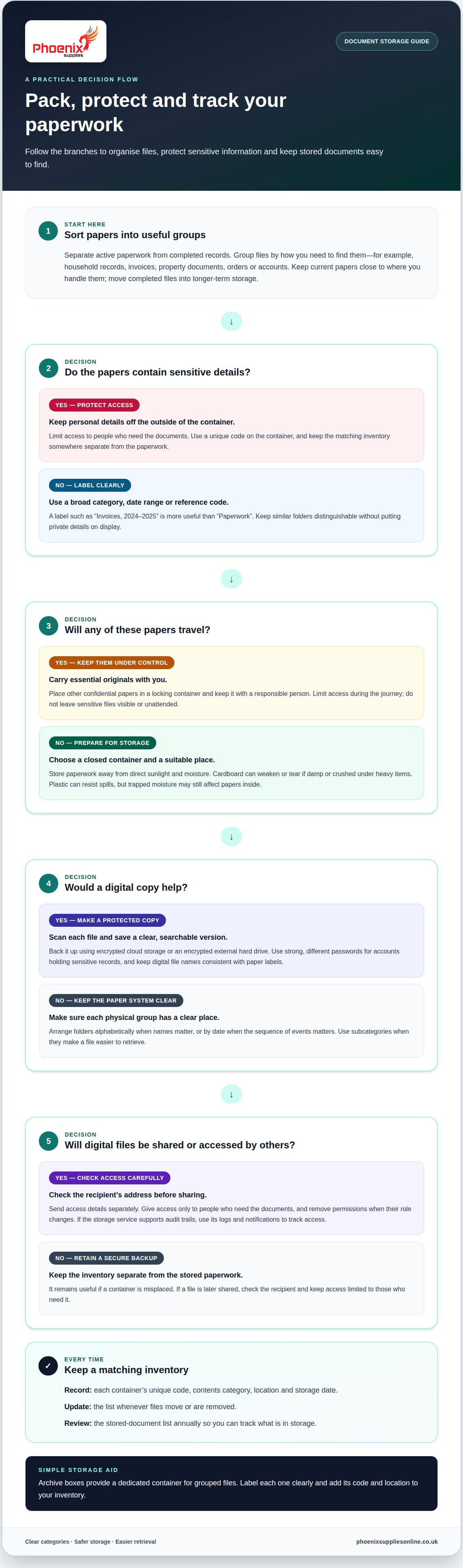
Give each document container a clear label and a matching inventory entry. Use broad categories such as household records, invoices or staff files. Add a date range or reference code to distinguish similar folders. A label such as “Invoices, 2024-2025” is more useful than “Paperwork”. Keep sensitive names and personal details off the outside of containers.
Record each container’s location, contents category and storage date. A simple spreadsheet can show whether a box is in a cupboard, archive room or another secure place. Give each container a unique code, then add it to the label and inventory. Review the stored-document list annually and update it whenever files move or are removed.
For confidential documents travelling in the UK, place papers in a locking container and keep it with a responsible person. Limit access during the journey, and avoid leaving sensitive files visible or unattended.
To digitise important paper documents, scan each file and save a clear, searchable copy. Back it up using encrypted cloud storage or an encrypted external hard drive, then protect access with strong passwords.
Keep digital names consistent with paper labels. For example, use “Invoices_2024-2025” for both the folder and its scanned files. This makes keeping physical and digital records in step simpler. Store the digital inventory separately from the paperwork, so it remains useful if a container is misplaced.
If a storage service supports audit trails, use its logs and notifications to track when files are viewed or accessed. These records can show which account opened a file and when. Give access only to people who need the documents, and remove permissions when their role changes.
Use a different, strong password for each account holding sensitive records. A password manager can help you store passwords safely without writing them on a box or folder. Before sharing a digital file, check the recipient’s address and send access details separately. These steps help protect files in storage and when sharing them.
2. Risks of unsecured files
Paperwork left within reach may expose names, signatures, addresses or account details. A misplaced bank statement, for example, can reveal information that puts someone at risk of identity theft, financial loss or a privacy breach. Business records may also contain supplier terms or staff details that should not be visible to everyone. The potential harm depends on what the papers reveal and who can access them.
Digital files have different weak points. A document sent to a mistyped email address may reach the wrong recipient. A file changed during transfer may no longer be reliable, while a lost external drive can make records unavailable. Consider what would happen if a record went missing, landed in the wrong inbox or could no longer be opened. This helps you decide which files need extra care.
Carry essential original documents securely rather than leaving them loose among other belongings. Keep originals you need during a journey with you, and place other papers in a closed container that stays under your control.
Cardboard can be crushed or torn if heavy items are stacked on it, exposing papers or bending their edges. If it gets damp, it can weaken and pass moisture to the contents. Plastic containers can resist spills, but trapped moisture may still affect papers inside. Neither material protects against every risk, so handle containers carefully and keep them closed.
For example, property papers may be difficult to replace if lost, while an old receipt may be easier to recreate. Separate irreplaceable originals from routine paperwork, and avoid carrying more sensitive documents than the journey requires. This limits the information at risk if a bag or container goes missing.
To keep paper records grouped during storage, Archive boxes provide a dedicated container for your files.
3. Organising paperwork by category
Build a filing structure around the decisions you need to make. A household might separate current bills, property documents and records kept for reference. A business could group paperwork by process, such as orders, deliveries and accounts. This makes each category useful, rather than sorting papers by appearance alone.
Separate active paperwork from records you rarely need. Keep current documents close to where you handle incoming post, and move completed files into longer-term storage. For example, keep an open order with current work, then transfer its paperwork once the transaction is complete. This simple distinction helps prevent archived files from cluttering your workspace.
Use subcategories only when they make retrieval easier. A property folder might contain purchase documents, maintenance records and correspondence. If a group grows too large, split it by subject instead of creating lots of tiny folders from the outset. The best arrangement depends on how you search for a particular paper.
Give every physical group a clear place, then keep its order consistent. Arrange folders alphabetically when names matter, or by date when the sequence of events matters. Shelving and vertical wall space can keep containers accessible without taking over a desk. Leave enough room to remove one file without disturbing the rest.
Plan how to pack files and documents securely by matching each category to its final location. A simple location key can connect a shelf position with a folder group without displaying private contents. Keep a separate working area for papers awaiting action, such as forms to complete or correspondence to file. This separates unfinished tasks from stored records and makes the system easier to maintain.
As you add files, sort paperwork into logical categories and label containers clearly so each group has an obvious destination. This gives every document a consistent place and makes it easier to return paperwork after use. Use shelving and vertical wall space to arrange categorised document storage boxes in designated areas. Keep labels readable and consistent with your categories, so containers remain easy to identify as the filing structure grows.
4. Protecting paperwork from sunlight and moisture
Choose a dry, shaded storage place away from windows, sinks and radiators. Sunlight can fade printed text and make paper brittle over time. Damp air can encourage mould, especially when containers sit against cold walls. A cupboard in a dry room is often a better choice than a loft, shed or garage exposed to changing conditions.
No single packing material protects paper from water, fire and handling damage. A closed plastic container can help guard against splashes, while a fireproof safe is intended to protect its contents from fire. Keep containers dry, as trapped moisture can still affect papers. Choose a method suited to the risk you’re addressing.
When packing boxes, place documents in folders first, then group folders by subject. Keep papers flat and supported, with frequently used files near the top. Fill gaps with folders rather than loose items that could press against paper edges. Avoid overfilling: tightly packed boxes make files harder to remove without bending them.
Check the storage area before packing and during routine visits. Look for water marks, condensation or a musty smell near the shelf. Keep boxes raised from the floor, particularly in rooms with plumbing or external walls. If a leak or damp patch appears, move the paperwork to a dry place promptly.
Leave a small gap between containers and walls so you can spot dampness early. Don’t place heavy belongings on document boxes, as pressure can crease folders or damage their contents. If a secure file needs long-term physical storage, note its location in your records without writing sensitive details on the outside.
Choose a shaded, dry spot and a box that fits the folders without crushing them. Plan your document storage around the conditions in your chosen space.
Secure file storage is designed to reduce the risk of unauthorised access or changes to files. It helps keep information private, deter data theft and support compliance with data-protection laws. Options include encrypted cloud services, fireproof safes and password-protected folders. Store sensitive paperwork in locking containers, and shred paperwork that is no longer needed.
Scan important paperwork to create a backup. You can set up a designated home document storage area in a home office or study to process incoming and outgoing paperwork.
Phoenix Supplies UK
Phoenix Supplies UK offers boxes for organising paperwork in different quantities and formats. Choose Small Moving Boxes for a smaller set of files, or Medium Moving Boxes and Large Moving Boxes for more paperwork. Extra Large TV Moving Boxes are also available for larger packing needs.
Use suitable boxes to keep labelled document groups together and make them easier to handle while planning storage. They complement your own steps to protect records from sunlight and moisture and to track each box’s contents.
If you’re preparing documents for a move or storage, contact Phoenix Supplies UK to discuss which boxes suit your packing needs.
Make your document storage easier to manage
Good storage starts with a practical plan, but it also needs to fit your everyday routines. Decide which records you may need to retrieve first, then keep those containers accessible. A consistent approach to how to pack files and documents securely can make future moves or archive reviews easier to manage.
Choose box sizes to suit the paperwork you’re sorting. Phoenix Supplies UK offers Small Moving Boxes, Medium Moving Boxes and Large Moving Boxes for different volumes of files. Once you’ve chosen what suits your records, keep labels and your inventory aligned with the contents.
Take the next step at a pace that suits you. Contact Phoenix Supplies UK today to discuss boxes for your paperwork. A clear plan and the right packing supplies can help you get your records organised and ready for storage.
Frequently Asked Questions
What Are the Risks?
Unsecured paperwork can expose personal details, get lost or reach the wrong person. A misplaced bank statement, for example, may reveal information that could be misused. Files can also become unavailable when nobody knows where they were stored, delaying a household task or business decision. For digital records, accidental changes or a failed backup can leave you without the version you need.


