

Your 65-inch television isn't just a fragile electronic; it's a structural liability that requires far more than a bit of bubble wrap to survive a house move. It's completely normal to feel a bit of dread when you look at that massive, thin screen and wonder how on earth you'll get it to your new home in one piece. You're likely worried about the screen cracking under pressure, or perhaps you're unsure if a standard box is actually sturdy enough to protect your investment. Most people find themselves questioning whether they should lay the screen flat or if they need specialist equipment to get the job done safely.
The good news is that you don't need to hire a team of experts to achieve a professional result. This guide will show you exactly how to pack a large TV for moving using a "suspension" strategy that keeps the screen safe from impact and vibration. We'll walk you through the essential materials you need, from extra large TV moving boxes to removal blankets, while providing clear instructions to build your confidence. By following these steps, you can ensure your television arrives at your new lounge without a single scratch or crack.
Key Takeaways
- Understand why modern 65-inch screens are structural liabilities and how a "suspension" packing strategy protects them from internal pressure.
- Learn how to pack a large TV for moving using double-wall boxes that provide the heavy-duty reinforcement needed for substantial electronics.
- Discover the professional way to layer materials, from using bubble wrap for impact resistance to removal blankets for non-abrasive surface protection.
- Master the essential "upright rule" for transport to ensure your television stays safe from the vibrations and shifts of the moving van.
Why Packing a 65-Inch TV Requires a Specialist Strategy
Modern televisions are marvels of engineering, designed to look stunning in your lounge with their bezel-less edges and razor-thin profiles. However, these same design choices make them incredibly vulnerable during a house move. Unlike older models that had thick plastic frames to absorb shocks, today's 65-inch screens prioritise aesthetics over structural rigidity. When you're learning how to pack a large TV for moving, it's vital to realise that you aren't just protecting the glass from scratches; you're protecting the internal components from the physics of motion.
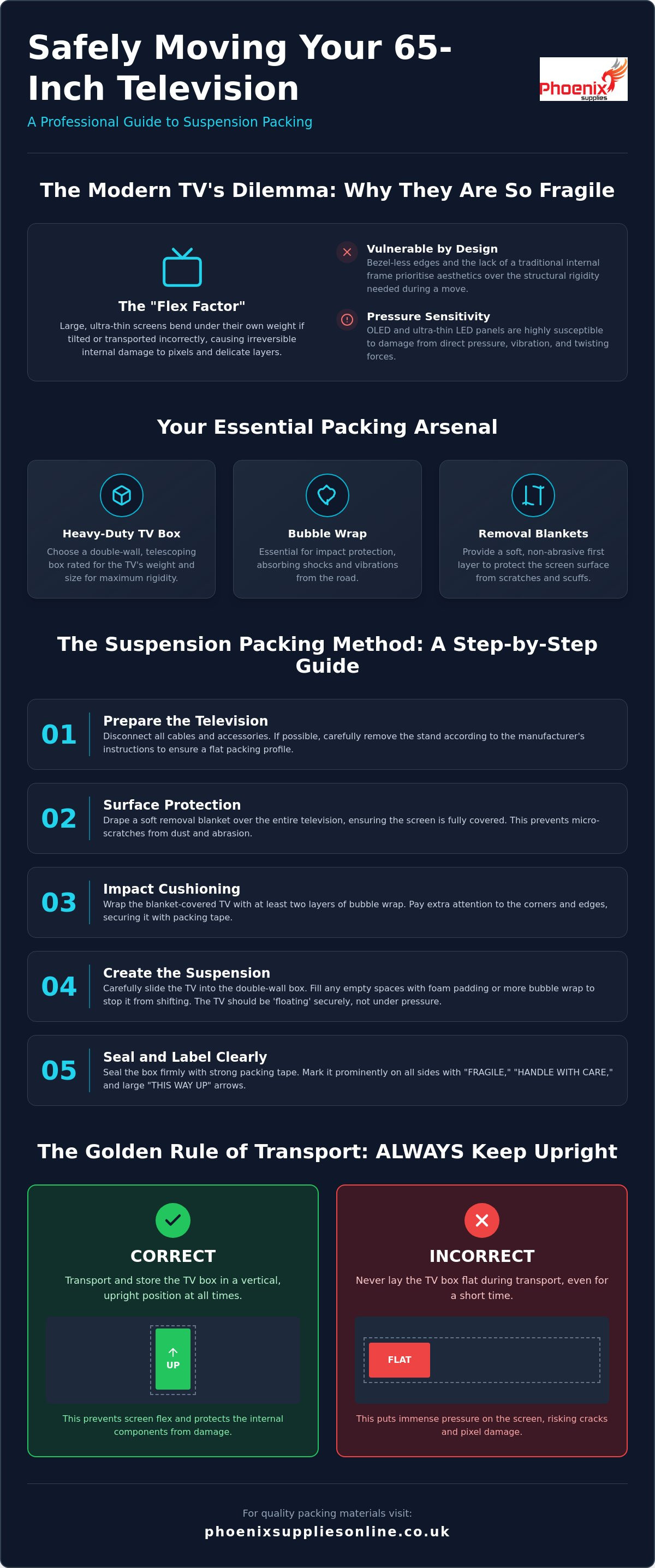
The primary danger is a phenomenon known as the "Flex Factor." Because a 65-inch panel has such a large surface area, it can actually bend under its own weight if it's tilted at the wrong angle. This isn't just about the glass breaking. It's about the delicate layers of pixels inside being crushed or separated. To prevent this, you need a strategy that focuses on two distinct types of protection. Surface protection prevents micro-scratches from dust and grit, whilst impact protection involves using high-quality package cushioning materials to absorb the vibrations of the road.
The Vulnerability of OLED and Ultra-Thin LED Screens
OLED and ultra-thin LED screens are particularly at risk because they lack a traditional internal chassis. Without a sturdy frame, the entire glass panel is susceptible to pressure from any direction. Screen flex is the primary cause of internal crystal damage, often occurring when someone grips the screen too tightly or allows it to lean. Whilst a soft removal blanket is excellent for preventing surface scuffs, it does nothing to stop the torque and twisting forces that happen when a removal van turns a corner or hits a pothole. You need a rigid exterior to keep that panel perfectly flat.
Original Packaging vs. Aftermarket TV Moving Boxes
Many people intend to keep their original manufacturer boxes, but these often perish over time. If you've stored your box in a garage or loft, dampness can weaken the cardboard fibres, making it soft and unreliable. A fresh, heavy-duty 65-inch TV box is a much safer bet. These boxes are constructed with double-wall corrugated cardboard, which provides the vertical strength needed to resist crushing. Using a dedicated Extra Large TV Moving Box also ensures you have enough depth to fit the necessary layers of bubble wrap and padding without forcing the screen against the sides. It's about creating a "floating" environment where the TV is held securely but isn't under direct pressure.
Choosing the Right 65-Inch TV Box for Moving
Selecting the correct container is the first step in mastering how to pack a large TV for moving. You cannot rely on a standard cardboard box found at a local supermarket or a second-hand box from a friend. Large-screen televisions require a specific level of structural integrity to prevent the base from giving way during transit. A 65-inch television often weighs between 20kg and 35kg, which places significant pressure on the bottom of any packaging. If the box isn't rated for this weight, it can "bottom out" during a lift, leading to a dropped screen and potential injury.
Following expert tips for moving a large screen TV, the telescoping box is widely considered the gold standard. This design consists of two heavy-duty pieces that slide over one another, allowing you to adjust the height perfectly whilst providing double the protection around the middle of the screen. This overlapping structure adds a layer of rigidity that single-piece boxes simply cannot match, ensuring the panel remains upright and flat throughout the journey.
Double Wall vs. Single Wall Cardboard
Standard moving boxes usually feature single-wall construction, which consists of one layer of corrugated fluting between two liners. While this is perfectly fine for packing clothes or bedding, it offers very little puncture resistance for expensive tech. For electronics, you must use "Double Wall" cardboard. This features two layers of fluting, creating a rigid barrier that resists bending and prevents sharp objects from piercing through to the screen. If you are preparing for a move, choosing Extra Large TV Moving Boxes with double-wall reinforcement is the best way to safeguard your investment.
Sizing Your Box for Proper Suspension
One common mistake is choosing a box based solely on the diagonal screen size. A 65-inch TV refers to the screen itself, but the physical outer dimensions, including the frame and any attached stand, will be much larger. You should measure the total height, width, and depth accurately before making a purchase. Aim for a box that leaves approximately a 5cm buffer zone on all sides. This gap is essential because it provides the necessary space for padding. If the box is too tight, any external impact will be transferred directly to the glass. Conversely, a box that is too large allows the TV to shift and slide, which is a leading cause of internal damage during van movement.
The Essential Arsenal: Packing Materials You Need
Having the right box is only half the battle. To truly master how to pack a large TV for moving, you need a specific set of internal tools designed to absorb shock and prevent surface damage. You're building a multi-layered defence system. The goal isn't just to stop the TV from moving; it's to ensure that even if the box takes a knock, the energy never reaches the delicate glass panel. You'll need high-quality bubble wrap, professional-grade removal blankets, and edge protectors to reinforce the most vulnerable points of the unit.
Don't be tempted to use cheap, thin packing tape for this job. A 65-inch television is a heavy piece of kit, and standard tape can lose its grip under the weight or peel away in a humid removal van. Use a wide, high-tack tape to seal every seam of your box. This prevents the cardboard from flexing and ensures the structural integrity of your double-wall container remains intact from the moment you lift it until it's safely in your new lounge.
Bubble Wrap vs. Removal Blankets
There's a specific order to layering these materials. Start with a non-abrasive layer like a soft removal blanket to protect the screen from micro-scratches. Whilst many people reach for bubble wrap first, you should never let plastic touch the screen directly for long periods. In a warm van, the plastic can sometimes leave a "patterning" residue on the screen coating that's difficult to remove. Use bubble wrap as your second layer to provide impact resistance. For more advice on choosing the right protection, check out our guide on Bubble Wrap for Moving House: Fragile Packing Tips. When you're learning how to pack a large TV for moving, remember that the blanket provides the "softness" whilst the bubble wrap provides the "bounce."
Securing Cables and Accessories
It's easy to focus so much on the screen that you forget the accessories. Loose cables are a major hazard; a dangling HDMI plug can easily swing around and scratch the panel during transit. Unplug everything and use zip ties or velcro straps to organise your leads. We always recommend removing the TV stand entirely. These are often made of heavy metal or glass and can put unnecessary pressure on the bottom of the screen if left attached. Pack the stand, remote, and power cables separately in one of our Medium Moving Boxes. Don't forget to take a photo of the ports before you unplug anything to make setting up your home cinema a breeze at the other end.
Step-by-Step: How to Pack Your Large TV Safely
Once you have gathered your materials, the physical process of how to pack a large TV for moving begins with meticulous preparation. You cannot rush this stage. Start by cleaning the screen with a dry microfibre cloth to remove every speck of dust. If grit is trapped between the screen and your packing materials, the vibrations of the van can cause it to act like sandpaper, leading to permanent micro-scratches. After cleaning, wrap the entire unit in a soft removal blanket. This creates a non-abrasive barrier that protects the delicate screen coating from the plastic of the bubble wrap.
Next, apply multiple layers of bubble wrap over the blanket. Pay special attention to the corners, as these are the points most likely to sustain damage if the box is bumped. We recommend using at least two layers of large-bubble wrap for maximum impact resistance. Before you attempt to move the TV, prepare the base of your box. Fill the bottom 5cm to 10cm with crumpled packing paper or foam inserts to create a shock-absorbing "nest." This ensures the weight of the TV doesn't rest directly on the bottom flaps of the cardboard.
The final stage of the packing process is the two-person lift. Never attempt to box a 65-inch television alone. Have one person support each side of the screen, keeping it perfectly upright, and lower it gently into the centre of the box. If you want to ensure your screen has the best possible protection, you can order your Extra Large TV Moving Boxes from our specialist range to get the heavy-duty double-wall construction required for this job.
The "Box-Within-a-Box" Technique
For particularly expensive OLED or bezel-less models, you might consider an inner sleeve. You can create this by taping cardboard offcuts around the wrapped TV to form internal "struts." These struts act as a secondary skeleton, preventing the outer box from crushing inwards if other items shift in the van. Once the TV is inside, fill any remaining gaps with paper or bubble wrap. A perfectly packed TV should not rattle when the box is gently shaken; it should feel like a single, solid unit.
Sealing and Labelling for the Removal Team
To secure the box, use the "H-Taping" method. This involves taping down the centre seam and then across both end seams to form a capital 'H'. This technique provides maximum reinforcement for the bottom flaps, which bear the brunt of the TV's weight. Finally, use a thick marker to label the box clearly on at least three sides. You should include "FRAGILE", "THIS SIDE UP", and "DO NOT LAY FLAT." It is also helpful to mark which side the screen is facing so the removal team knows which side to keep away from sharp corners or heavy furniture.
Transport and Loading: The Golden Rules of TV Safety
Once the tape is dry and the labels are clear, the focus shifts from the box to the van. The way you handle and position the television during transit is just as critical as the packing itself. Even the best-packed box cannot protect a screen from the sheer force of a heavy item toppling over or the sustained vibrations of a long motorway journey. Knowing how to pack a large TV for moving is only the first half of the job; the second half is ensuring it survives the physics of the road.
The most important rule of the entire process is to keep the unit upright at all times. Television screens are designed to support their own weight vertically. When you lay a 65-inch screen flat, the glass panel is unsupported in the centre. Every bump in the road sends vibrations through the glass, which can cause internal layers to separate or the panel to snap under its own pressure. If a helper or removal person suggests laying it flat to save space, you should politely but firmly insist it remains upright.
Why You Must Never Lay a TV Flat
The internal components of modern LED and OLED screens are incredibly thin and sensitive to horizontal pressure. When upright, the weight is distributed through the frame. When flat, the weight of the glass itself creates a "sag" that puts immense stress on the pixels. Road vibrations are significantly amplified when a screen is horizontal, often leading to "pressure spots" or hairline cracks that only become visible once you turn the TV on. If you want to ensure your screen remains intact, the vertical rule is non-negotiable.
Securing the Load in the Removal Van
The safest place for your television is against a flat, stable surface like the side-wall of the van or nestled securely between two heavy, immobile pieces of furniture like wardrobes. Avoid the temptation to wedge the box between mattresses. Mattresses are surprisingly bouncy and can shift during transit, which might lead to the box being crushed or tipped over. Instead, use Webbing Straps to anchor the box firmly to the van's internal rails. This prevents the box from sliding or toppling when the driver brakes or turns a corner. For more detail on this technique, you can read our guide on Securing Your Load: Using Webbing Straps for Safety.
Finally, consider the temperature of your new home. If you are moving during a cold spell, your television will arrive at the new house quite chilled. Bringing a cold electronic device into a warm lounge can cause condensation to form on the internal circuits. To prevent a short circuit, allow the TV to sit in its new environment for at least two to three hours before plugging it in. This simple bit of patience ensures that your effort in learning how to pack a large TV for moving results in a perfect picture on your first night in the new house.
Protect Your Investment for the Journey Ahead
Moving a 65-inch screen safely comes down to respecting the physics of the device. By choosing heavy-duty double-wall boxes and strictly following the upright rule, you can prevent the flex and pressure that lead to costly cracks. Remember to clean the screen before wrapping it in soft removal blankets to avoid micro-scratches during transit. Understanding how to pack a large TV for moving gives you the confidence to handle your most fragile tech with ease, ensuring your home cinema is ready for the next big match. For those who want to take their passion further, Fotballturer.no offers complete travel packages including hotel and match tickets for the biggest European leagues.
At Phoenix Supplies UK, we're a family-run business dedicated to providing the reliable materials you need for a smooth transition. Our specialist double-wall cardboard for electronics is built to withstand the rigours of the road; we also offer free national delivery on all moving packs to help keep your costs down. Browse our range of Heavy-Duty TV Moving Boxes at Phoenix Supplies UK today. You've done the hard work of planning; now let's get your television to your new home in perfect condition.
Frequently Asked Questions
Can I move a 65-inch TV without a box?
Moving a 65-inch TV without a box is extremely risky and generally not recommended for a house move. Without the rigid support of a double-wall box, the screen is vulnerable to flex and external pressure that can cause permanent internal crystal damage. If you must move it unboxed, you will need to wrap it heavily in removal blankets and keep it upright, but a dedicated box is the only way to ensure total safety during transit.
How many layers of bubble wrap do I need for a TV?
You should use at least two full layers of large-bubble wrap to provide adequate impact protection for your screen. It is best to apply this over an initial layer of a soft removal blanket to protect the screen surface from micro-scratches. This multi-layered approach is the professional secret for how to pack a large TV for moving without risking damage from external bumps or vibrations in the van.
Is it okay to lay an LED or OLED TV flat for a short drive?
You should never lay an LED or OLED TV flat, even for a very short drive to a nearby street. Road vibrations are significantly amplified when the screen is horizontal, which puts immense pressure on the centre of the glass panel. Keeping the TV upright ensures the weight is distributed through the frame, preventing the structural "sag" that leads to hairline cracks or pixel failure.
What size box do I need for a 65-inch TV?
You need a box based on the physical outer dimensions of the unit, not the 65-inch diagonal screen measurement. Measure the total height, width, and depth of the unit, then choose a box that allows for a 5cm buffer zone on all sides. This extra space is vital for the removal blankets and bubble wrap that keep the TV suspended and safe inside the container.
Should I remove the stand before packing my TV?
Yes, you should always remove the stand before you begin the packing process. Most stands are made of heavy materials that can put unnecessary pressure on the bottom of the screen or cause the box to become unbalanced. Pack the stand, screws, and remote separately in one of our Medium Moving Boxes to keep everything organised and prevent the metal base from scratching the screen.
How do I protect the corners of my TV during a move?
The best way to protect corners is to use specialist foam corner protectors or extra wadding made from bubble wrap. Corners are the most common point of impact if a box is set down too heavily or bumped against a doorframe. Reinforcing these areas ensures the structural integrity of the TV is not compromised by a single point of pressure during the lift.
Can I use a normal cardboard box for my TV?
A normal single-wall cardboard box is not strong enough to support the weight of a 65-inch television. You must use a heavy-duty double-wall box designed specifically for electronics to prevent the base from giving way during a lift. Double-wall fluting also provides the puncture resistance needed to protect the screen from other sharp items whilst in the removal van.
How long should I wait to turn on my TV after moving?
You should wait at least two to three hours before turning on your TV after it has been moved into your new home. This allows the internal components to reach room temperature and ensures any condensation that formed during transit has completely evaporated. Taking this small precaution prevents short circuits and protects your television's delicate internal circuitry from moisture damage.


